
Last updated October 16, 2026
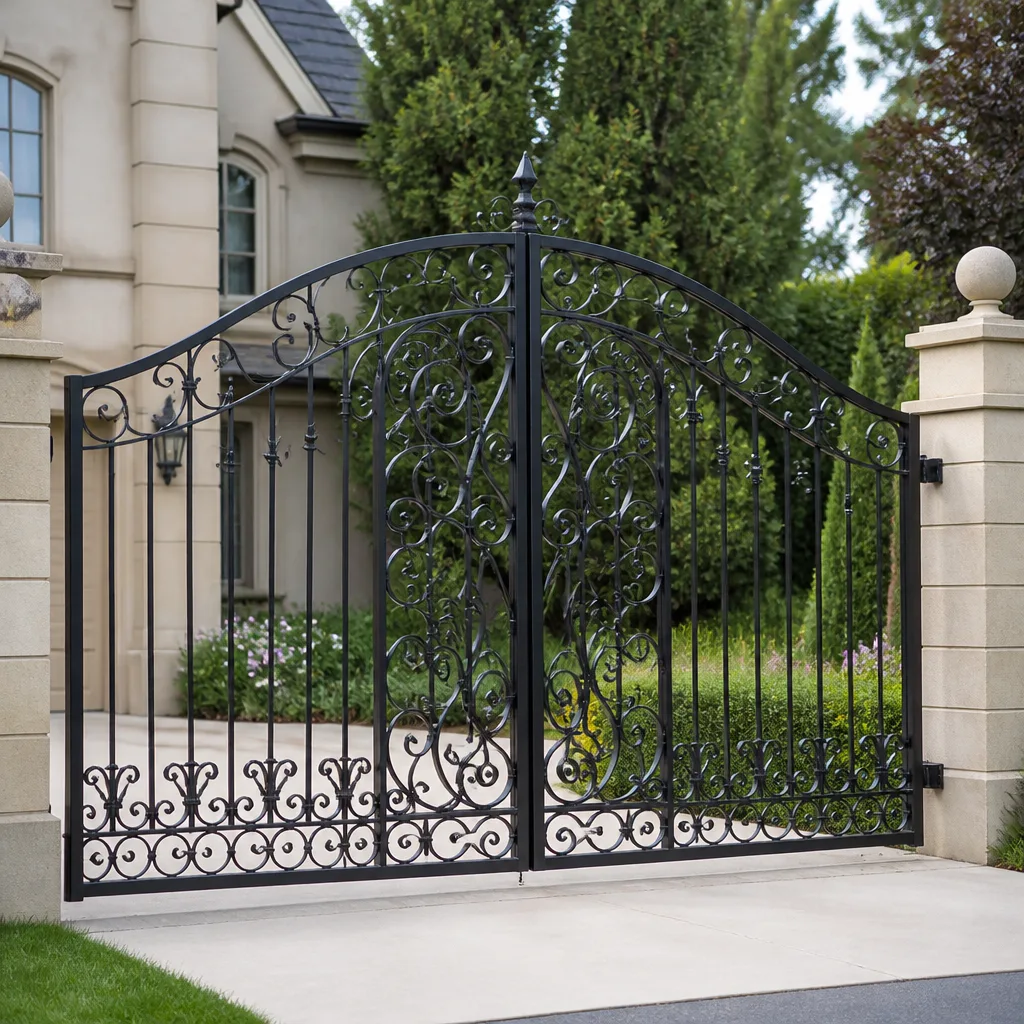 Wrought iron
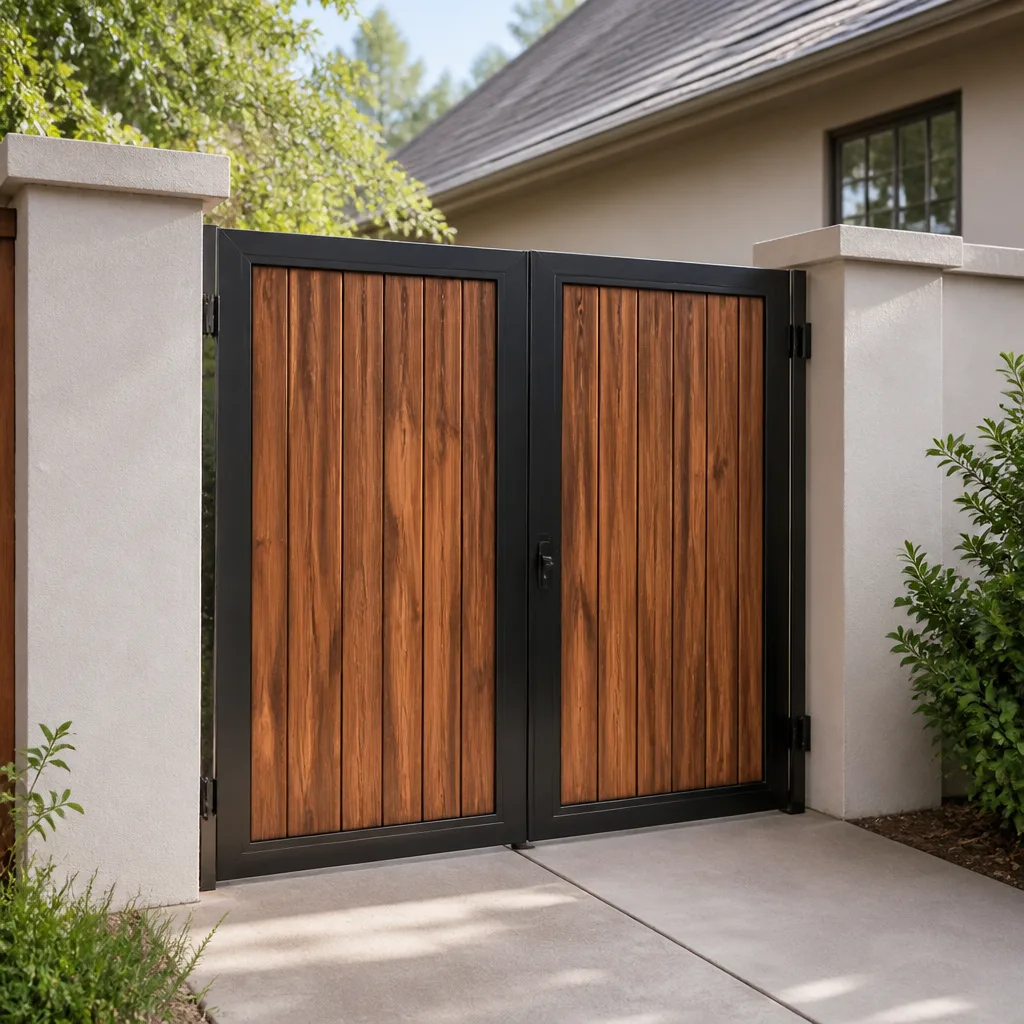 Wood & steel frame
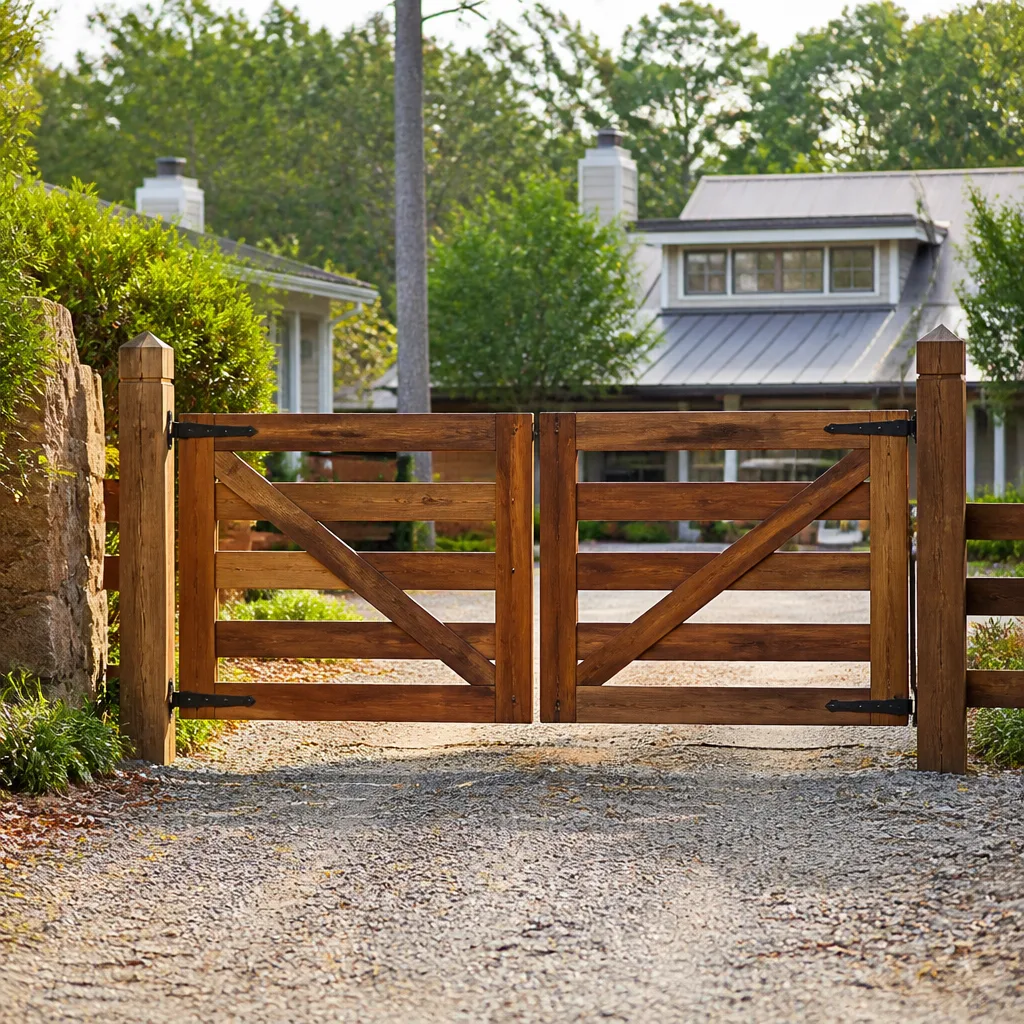 Farm & ranch
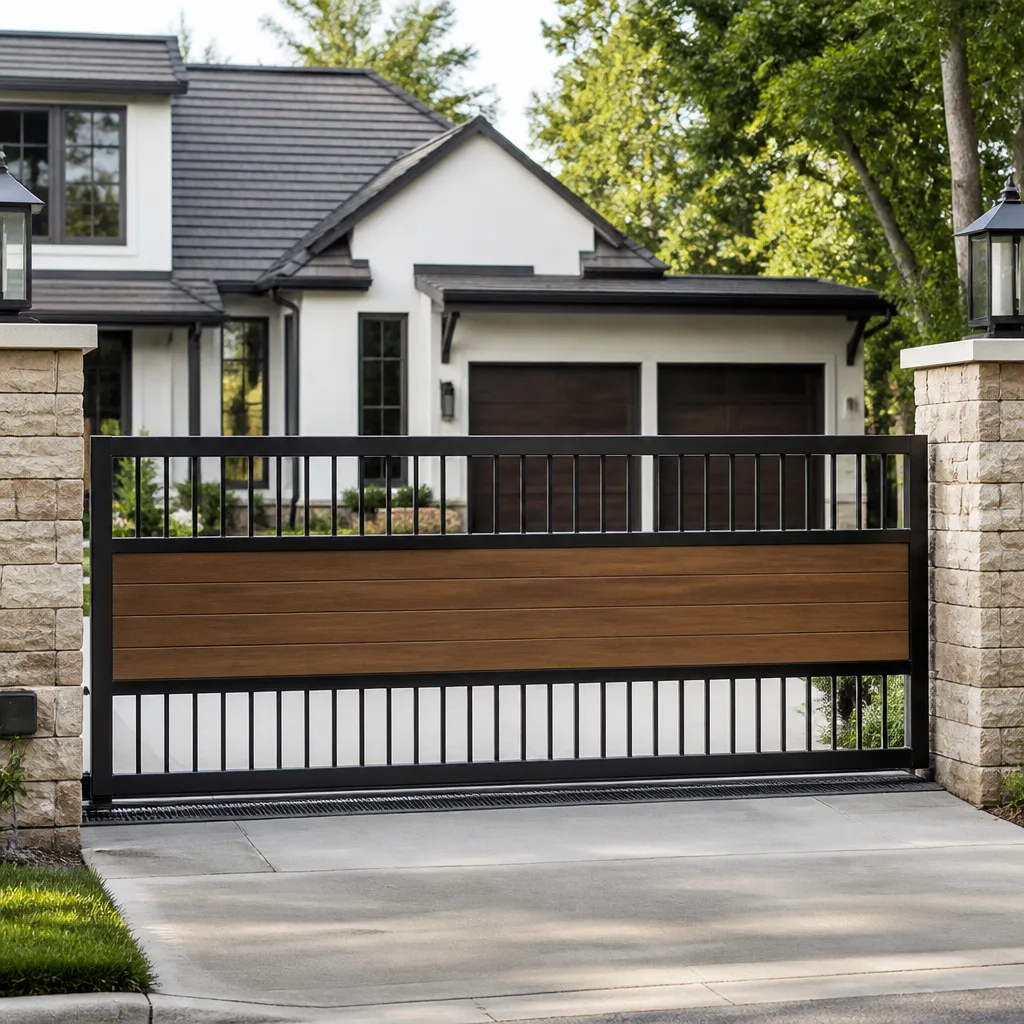 Sliding driveway gates
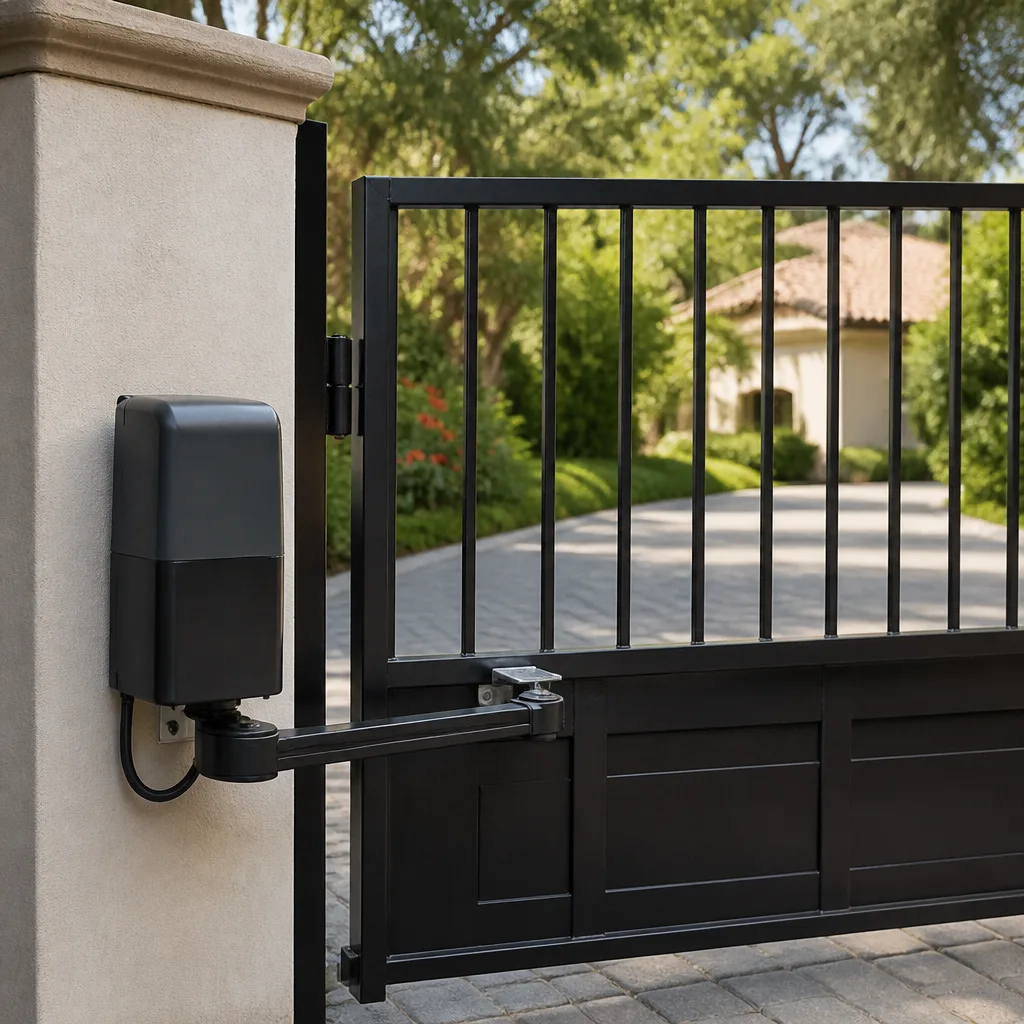 LiftMaster operators
Free on-site gate assessment - hinges, posts, and your LiftMaster or Nice gate operator checked before anything is quoted
The assessment is free and the quote is the invoice.
Get your free estimateDIY vs Professional Gate Repair: The Yonkers Homeowner’s Decision Guide
Adjusting gate travel limits yourself on a UL 325-compliant opener can void the manufacturer’s warranty and, in New York, potentially affect your homeowner’s insurance coverage if the gate later causes an injury. That’s not a scare tactic. It’s the reality of modern automatic gate systems, which are governed by federal safety standards that most homeowners never hear about until something goes wrong. This guide draws the line between what’s genuinely safe to fix yourself and what should be left to a pro, broken down by component rather than by confidence level. We’ll walk through real costs, real warranty implications, and the specific failure types we see in Yonkers driveways week after week. For Gate Repair Cost Breakdown: The Yonkers Homeowner’s Reference for 2026, see our dedicated pricing guide.
Quick Answer
Most gate repair tasks in Yonkers fall into two clean categories: safe DIY work like hinge lubrication, remote re-pairing, and battery backup replacement, versus professional-only work like limit switch adjustment, control board replacement, and anything touching 120V wiring that should be handled by our Gate Repair services. The deciding factor isn’t your mechanical skill, it’s liability exposure, warranty coverage, and the cost of secondary damage if the repair goes wrong. For the five most common gate failures, professional flat-rate repair typically runs $180 to $450 before parts, while DIY attempts often end up costing more once secondary damage and warranty loss are factored in.
Styles & brands we work with
Table of Contents
- The Safe DIY List: Four Repairs You Can Do This Weekend
- The Call-a-Pro List: Five Jobs That Carry Real Risk
- How DIY Repairs Affect Your Gate Opener Warranty
- The Liability Angle: What Your Insurance Actually Covers in Yonkers
- Honest Cost Comparison: DIY vs Professional for Five Common Failures
- Yonkers-Specific Factors: Climate, Code, and Local Market Realities
- Common Mistakes to Avoid
- When to Call a Professional
- Frequently Asked Questions
The Safe DIY List: Four Repairs You Can Do This Weekend
Some gate repairs are genuinely simple, low-risk, and don’t require specialized tools or knowledge. We tell homeowners in Yonkers this all the time: if it’s on this list, go ahead and do it yourself. You’ll save a service call fee and learn a little about your gate in the process.
1. Hinge Lubrication
This is the most neglected maintenance task on automatic gates, and it’s embarrassingly easy to do. Gate hinges on Yonkers properties take a beating from winter road salt, summer humidity, and the constant weight of a swinging gate panel. When hinges get dry, the gate motor works harder, which shortens its lifespan and can eventually trigger overload faults.
What you need: a can of white lithium grease or silicone spray, a rag, and five minutes. Open the gate fully and apply lubricant to each hinge pivot point, working the gate back and forth a few times to distribute it. Do this twice a year, spring and fall. If you hear grinding or see metal shavings, the hinge is beyond lubrication and needs replacement, which is a pro job because the gate panel has to be supported while the old hinge comes out.
2. Remote Re-pairing
If your remote stopped working but the keypad and wall button still open the gate, the remote likely lost its programming. Most LiftMaster and Linear remotes can be re-paired in under two minutes. Locate the “Learn” or “Program” button on the opener control board, press it until the indicator light comes on, then press the remote button. The light should flash to confirm programming.
We field calls from Yonkers homeowners every week who think their opener is dead when it’s really just a remote that fell out of sync. Try re-pairing before you call anyone. Worst case, the remote battery is dead, which is a 30-second fix with a coin cell battery from any hardware store on Central Avenue.
3. Battery Backup Replacement
Most modern gate openers have a battery backup that kicks in during power outages. These batteries last three to five years and are designed to be replaced by the homeowner. If your gate opener beeps intermittently or shows a “low battery” indicator, the backup battery is likely at the end of its life.
Disconnect power to the opener at the breaker first, then open the control box. The battery is usually a sealed lead-acid unit with a simple plug connector. Swap it for the same voltage and amp-hour rating. This is a $40 to $80 part depending on the brand, and it takes about 15 minutes. FAAC and BFT openers use different battery configurations, so bring the old battery with you to the supplier if you’re unsure.
4. Basic Photocell Cleaning
Photocells, also called photo eyes or safety sensors, are the small devices mounted on either side of the gate opening that detect obstructions. When they get dirty, the gate refuses to close or reverses immediately after starting to close. This is the single most common “my gate is broken” call we get in Yonkers, and about a third of the time the fix is just a wipe with a damp cloth.
Check both photocells for dirt, cobwebs, or leaves. Clean the lenses gently. Make sure they’re still aligned, facing each other directly. If the small indicator light is solid, they’re getting power and aligned. If it’s blinking or off, you may have a wiring issue, and that’s where DIY should stop.
The Call-a-Pro List: Five Jobs That Carry Real Risk
These are the repairs where we’ve seen DIY attempts go wrong in Yonkers, and the consequences aren’t just a broken gate, they’re broken bones, damaged vehicles, and voided warranties. Some of these jobs look simple on YouTube. None of them are simple in practice.
1. Limit Switch Adjustment
The limit switch (the small sensor that tells the gate when to stop) is the most dangerous component for a DIY adjuster to touch. Set the close limit too aggressively and the gate slams into the post or, worse, into a person or vehicle. Set it too loosely and the gate doesn’t seal properly, which defeats the security purpose of having a gate in the first place.
Modern openers are UL 325-compliant, which means they include specific safety features like obstacle detection and force monitoring. Adjusting the limit switches changes how those safety systems interact with the gate’s physical travel. A miscalibrated limit switch on a Viking or Ghost Controls opener can cause the gate to over-travel and strain the motor, which is exactly the kind of damage manufacturers look for when denying warranty claims. This is a pro job, full stop.
2. Control Board Replacement
Control boards fail for a lot of reasons: power surges from storms, lightning strikes, moisture intrusion, or simple age. When the board goes, the gate either stops responding entirely or behaves erratically, opening and closing on its own or ignoring commands from every input device.
Replacing a control board involves disconnecting and reconnecting multiple low-voltage and high-voltage connections, plus reprogramming the opener’s specific parameters for your gate’s weight, length, and travel. One crossed wire on a FAAC board can fry the new board instantly, which turns a $300 repair into a $600 repair. We’ve seen it happen in Yonkers more than once, usually during “helpful” weekend projects.
3. Post Anchoring and Foundation Work
Gate posts in Yonkers take relentless abuse from freeze-thaw cycles. The ground shifts, posts lean, and eventually the gate starts sagging or the opener starts fighting the post. Fixing a leaning post requires digging out the old footing, resetting the post plumb and level, and pouring new concrete. It’s heavy work, but the reason it’s a pro job isn’t the labor, it’s the precision. A post that’s off by even half a degree becomes a problem within a year, because the gate geometry changes and the opener has to work harder every single cycle.
We’ve replaced openers on Yonkers properties where the real issue was a leaning post that a previous owner had “fixed” by shimming with scrap wood, which rots and shifts. The correct fix involves proper drainage, the right concrete depth for our frost line, and a post that’s actually set correctly.
4. Anything Involving 120V Wiring
The gate opener motor may run on 24V DC, but the power supply that converts your home’s 120V AC into that low voltage is inside the control box, and that means live household current is present. Touching the wrong connection can kill you. This isn’t an exaggeration. Electrical work on gate systems is governed by the National Electrical Code, and most Yonkers properties with automatic gates have a dedicated circuit for the gate.
If you see exposed wires, burnt connections, or you smell electrical burning near the control box, shut off the breaker and call a professional. This applies to loop detectors too, the magnetic sensors buried in the driveway that detect vehicles. Installing or repairing a loop detector requires cutting the driveway surface and running new wire, which is a two-person job with real equipment.
5. Gate Panel Replacement or Rebalancing
When a gate panel is damaged, warped, or rusted through, replacing it means disconnecting it from the opener, supporting its full weight, removing the hinges, and mounting a new panel that has to be perfectly aligned with the opener’s travel arc. For sliding gates, the panel has to be rebalanced so it rolls smoothly on its track without binding.
A gate panel is heavy. A standard steel driveway gate in Yonkers weighs between 200 and 600 pounds. If it drops while you’re working on it, the outcome is catastrophic. This is why professional gate repair companies carry specialized lifting equipment and work in pairs. The labor cost is part of the total, but the safety factor is the real reason this job belongs with a pro.
How DIY Repairs Affect Your Gate Opener Warranty
Here’s where most online DIY advice falls apart: it ignores the warranty. Every gate opener manufacturer writes specific language into its warranty that limits coverage when non-authorized work has been performed. We work on nine major brands, LiftMaster, FAAC, BFT, Linear, Viking, Ghost Controls, DoorKing, Elite, and Mighty Mule, and while the specifics vary, the pattern is consistent across all of them.
LiftMaster warranties, for example, are voided by any modification to the opener’s internal settings beyond the basic homeowner functions like programming remotes and adjusting the close force within the factory-set tolerance. Once you open the control board housing and start adjusting limit switches or jump pins on the board, you’re outside the warranty terms.
FAAC and BFT, which are Italian brands popular on high-end Yonkers properties, are even stricter. Their warranties require that repairs be performed by a qualified technician, and they specifically exclude damage caused by “unauthorized tampering” or “improper adjustment.” We’ve had to tell homeowners that a $150 DIY limit switch adjustment voided the warranty on a $1,800 FAAC opener, which means the subsequent control board failure was entirely out of pocket.
What doesn’t void your warranty: cleaning photocells, replacing the battery backup, re-pairing remotes, lubricating hinges, and replacing broken remotes. These are homeowner maintenance items, and manufacturers expect you to do them. The line is internal components: limit switches, control boards, motor capacitors, transformer wiring, and anything that requires opening the sealed control housing.
If you’re ever unsure, check your opener’s manual or call the manufacturer’s support line before you take anything apart. Or call us. We’ll tell you honestly whether a repair is DIY-safe for your specific opener model.
The Liability Angle: What Your Insurance Actually Covers in Yonkers
The conversation nobody has about DIY gate repair is what happens if the gate injures someone. In New York, homeowners have a legal duty to maintain their property in a reasonably safe condition. An automatic gate is a motorized device capable of crushing a person, and courts treat it accordingly.
Here’s the scenario: you adjust your gate’s limit switch or force setting yourself. Six months later, the gate closes on a neighbor’s car or, worse, on a person, and the safety reversal system doesn’t trigger because your adjustment threw off the calibration. The injured party files a claim against your homeowner’s insurance. The insurance company investigates, discovers the gate was modified by a non-professional, and depending on your specific policy language, they may deny coverage on the grounds of negligent maintenance.
New York follows a pure comparative negligence system, which means even if you’re partially at fault, you can be held financially responsible for your percentage of the damages. If your insurance company denies coverage because of unauthorized modifications to a safety device, that percentage comes out of your pocket, not their checkbook.
Professional repairs carry a different liability profile. When Calder Gate Repair services a gate in Yonkers, we’re not just fixing the mechanical issue. We’re returning the gate to UL 325 compliance, which means the safety systems are tested and functioning at the manufacturer’s specified parameters. That’s a documented service record you can show your insurance company if a claim ever arises. It’s not just a repair receipt, it’s evidence of due diligence.
The short version: a $200 professional limit switch adjustment is cheap insurance compared to the liability exposure of a DIY adjustment gone wrong. This is the specific reason we put limit switch work on the “call a pro” list, not because it’s technically difficult, but because the downstream consequences of getting it wrong are severe.
Honest Cost Comparison: DIY vs Professional for Five Common Failures
Let’s talk dollars. Here’s what these five common gate failures actually cost to fix yourself versus what a professional flat-rate repair runs in Yonkers. These are real numbers from our 15 years working on Gate Repair in Yonkers, not national averages pulled from a data table.
The Five Most Common Gate Failures in Yonkers
- Photocell misalignment: DIY cost is $0 (just cleaning and realigning). Professional cost is $120 to $180 if the photocell needs replacement and rewiring.
- Remote lost programming: DIY cost is $0 to $8 (new battery). Professional cost is $80 to $120 for a service call and reprogramming, though we often walk homeowners through this over the phone for free.
- Limit switch miscalibration: DIY cost is $0 upfront but carries the risk of voided warranty and liability exposure. Professional cost is $180 to $240 for adjustment and safety system testing.
- Control board failure: DIY cost is $150 to $400 for the board itself, plus the risk of damaging the new board during installation. Professional cost is $350 to $550 including the part, installation, and programming.
- Leaning gate post: DIY cost is $100 to $250 for concrete and materials, plus the cost of redoing it when it shifts again. Professional cost is $400 to $800 for proper excavation, resetting, and new concrete.
Here’s the honest math. On the surface, DIY saves you the $100 to $150 service call fee. But when a control board replacement goes wrong because a wire got crossed, you’ve now paid for two boards plus the service call you were trying to avoid. We see this exact scenario multiple times a year in Yonkers. The professional route costs more upfront, but it includes the part warranty, the labor warranty, and the certainty that the gate will actually work when we leave.
For the safe DIY tasks, you should absolutely do them yourself. Hinge lubrication, battery backups, remote pairing, those are genuinely easy wins. Our Gate Repair Maintenance Checklist for Yonkers Homeowners covers the full routine. For everything else, the professional cost is often cheaper than the full cost of a DIY attempt gone sideways, once you factor in destroyed parts, wasted time, and the possibility of paying a pro anyway to fix what the DIY attempt broke.
Yonkers-Specific Factors: Climate, Code, and Local Market Realities
Yonkers is a tough place to own an automatic gate, and that’s not a complaint, it’s a physical reality. Our winters bring freeze-thaw cycles that shift the ground, our summers bring humidity that accelerates corrosion on untreated metal, and our proximity to the Hudson River means salt air reaches gates in neighborhoods along the waterfront. We’ve serviced Calder Gate Repair Yonkers home calls from Ludlow to Crestwood to Getty Square, and the failure patterns repeat across every neighborhood: rusted hinges, corroded control boards, and photocells that fail from moisture intrusion.
One thing many Yonkers homeowners don’t realize is that their property taxes don’t cover gate maintenance, but their property’s market value partly depends on the gate working correctly. A dead gate opener on a driveway gate is a visible signal to buyers that the property hasn’t been maintained. In an active real estate market like Yonkers, that’s a $5,000 to $10,000 negotiation chip you’re handing to a buyer.
There’s also the code question. Yonkers follows New York State building codes, which incorporate UL 325 safety standards for automatic gate systems. Any new gate installation or significant modification requires a permit through the Yonkers Department of Housing and Buildings. Repairs, including opener replacements and limit switch adjustments, don’t require a permit, but they do need to bring the gate back into UL 325 compliance. That’s the standard we work to on every job, and it’s the standard your insurance company expects your gate to meet.
For homeowners with Electric Gate Repair in Yonkers needs, the local market has a handful of generalist handyman services and a few gate-specific providers. The difference matters, because a generalist may not know the specific programming requirements of a Viking or Linear opener, and guessing at programming is how control boards get damaged.
Finally, there’s the urgency factor. Yonkers is a dense city with narrow driveways and tight property lines. When your gate stops working, it often traps your car in the driveway or leaves your property open to the street. That’s different from a homeowner in Dutchess County with a 200-foot driveway and a gate they barely use. Speed matters here, and a pro who can get to you the same day is worth the premium over a DIY attempt that stretches across a weekend while your car sits stuck.
Common Mistakes to Avoid
- Adjusting limit switches based on a YouTube video for a different brand. A LiftMaster opener’s calibration procedure is not the same as a BFT opener’s, and the torque settings are completely different. Matching the wrong procedure to your opener can cause immediate over-travel damage.
- Lubricating the gate track or chain with WD-40. WD-40 is a solvent, not a lubricant, and it strips the factory grease off chains and tracks, which accelerates wear. Use a proper silicone or lithium grease instead.
- Forcing a gate that’s binding or stuck. If your gate is fighting the opener, the cause is mechanical, not electrical. Forcing it open or closed by hand while the opener is still engaged can strip gears and destroy the motor, turning a $200 hinge repair into a $600 opener replacement.
- Replacing a control board without checking the power supply first. Many “dead” control boards in Yonkers are actually fine. The real problem is a blown fuse, a tripped GFCI outlet, or a surge-damaged transformer. Replacing the board without checking the supply wastes $300 and doesn’t fix the gate.
- Ignoring a gate that’s moving slower than usual. Slower movement means the motor is working harder, which usually means a hinge is seizing or the gearbox is wearing out. Waiting until it stops moving entirely usually turns a simple repair into a full opener replacement.
- Treating every gate repair as an emergency that requires immediate self-help. A gate that won’t open is frustrating, but most failures aren’t urgent in the “your house will flood” sense. Taking 24 hours to get a pro in Yonkers is usually cheaper than trying an emergency DIY repair at 9 p.m. and damaging the opener.
When to Call a Professional
Call a professional when the repair involves limit switches, control boards, 120V wiring, post anchoring, or gate panel replacement. Call a professional when you’ve tried the safe DIY fixes, cleaning photocells, re-pairing remotes, replacing batteries, and the gate still isn’t working. Call a professional when your gate is making grinding noises, moving erratically, or failing to reverse when it hits an obstacle, because those are safety system failures, not convenience issues. Call a professional when your opener is still under warranty and you want to keep it that way. Explore more guides & resources on gate safety and maintenance. Calder Gate Repair Yonkers offers free estimates in Yonkers, call (585) 496-2148 and a live person will answer, 24 hours a day, even at 2 a.m. when your gate just failed and you’re panicking about your car being trapped.
Frequently Asked Questions
Most gate repairs in Yonkers run between $180 and $450 before parts, depending on the failure type. Simple repairs like photocell replacement or remote reprogramming typically fall at the low end, while control board replacement or post resetting falls higher. Every job with Calder Gate Repair Yonkers starts with a written price before any work begins, so the number on your invoice matches the number you agreed to. Call (585) 496-2148 for an exact quote on your specific gate.
You can perform homeowner maintenance tasks like remote pairing, battery backup replacement, hinge lubrication, and photocell cleaning without voiding your opener’s warranty. Any work that opens the sealed control housing or adjusts internal settings, like limit switches, force settings, or control board wiring, will void the warranty on most brands, including LiftMaster, FAAC, BFT, Linear, Viking, and Mighty Mule.
Homeowners insurance typically covers sudden damage to your gate from covered perils like falling trees, vehicle impact, or lightning strikes. It does not cover wear-and-tear, and it may not cover liability claims if the gate was modified by a non-professional and the modification contributed to the injury or damage. Keeping a professional service record of all repairs is the strongest protection against a denied claim.
We see photocell failures, corrosion on hinges and control boards, freeze-thaw post shifting, and remote programming loss more frequently in Yonkers than in surrounding areas. The Hudson River humidity and the winter ground movement are the two biggest environmental factors, and they affect gates in every neighborhood from Park Hill to McLean Heights consistently.
If the gate is stuck open and your property is unsecured, or stuck closed and your vehicle is trapped, that’s urgent and you should address it immediately. Calder Gate Repair Yonkers answers the phone with a live person 24/7, and we dispatch for genuine emergencies. If the gate is just moving slowly or making a new noise, it can usually wait until the next business day without becoming a larger problem. Call (585) 496-2148 and describe the symptom, and we’ll tell you honestly whether it needs immediate attention.
Repairs, including opener replacement and limit switch adjustment, do not require a permit. New gate installations and significant modifications do require a permit through the Yonkers Department of Housing and Buildings. If you’re unsure, call us and we’ll tell you where your project falls, no charge for the answer.
The Bottom Line
The DIY versus professional gate repair question isn’t about whether you’re handy, it’s about whether the specific repair you need falls on the safe or risky side of the component line. Hinge lubrication, remote pairing, battery swaps, and photocell cleaning are genuine DIY wins that save you a service call. Limit switch adjustment, control board work, 120V wiring, post anchoring, and panel replacement are professional jobs because the cost of failure isn’t just a broken gate, it’s voided warranties, denied insurance claims, and genuine physical danger. In Yonkers, where freeze-thaw cycles and Hudson River humidity accelerate gate wear, the smart homeowners are the ones who know the difference. For Gate Opener Repair in Yonkers, that knowledge is the difference between a $50 maintenance item and a $1,500 opener replacement.
Written by Nico Alvarez, Owner at Calder Gate Repair Yonkers, serving Yonkers since 2009.
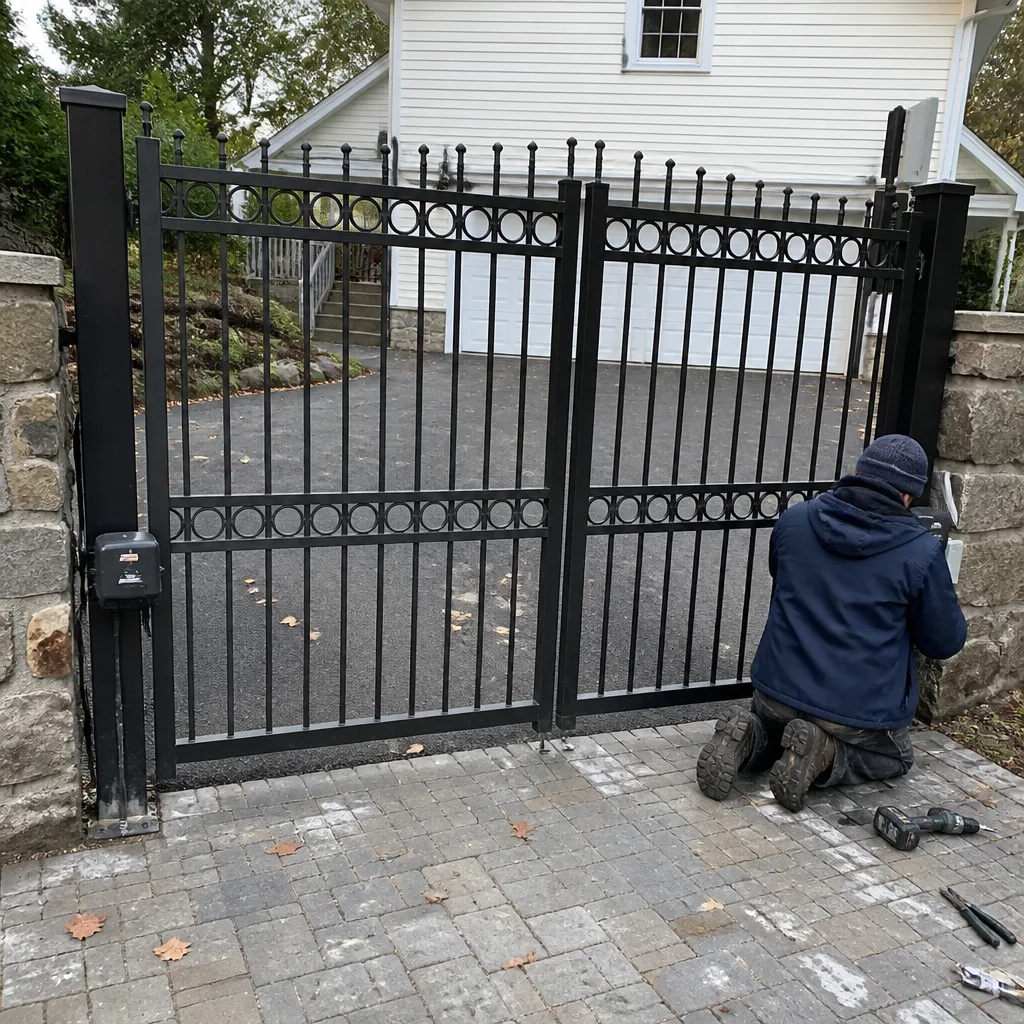
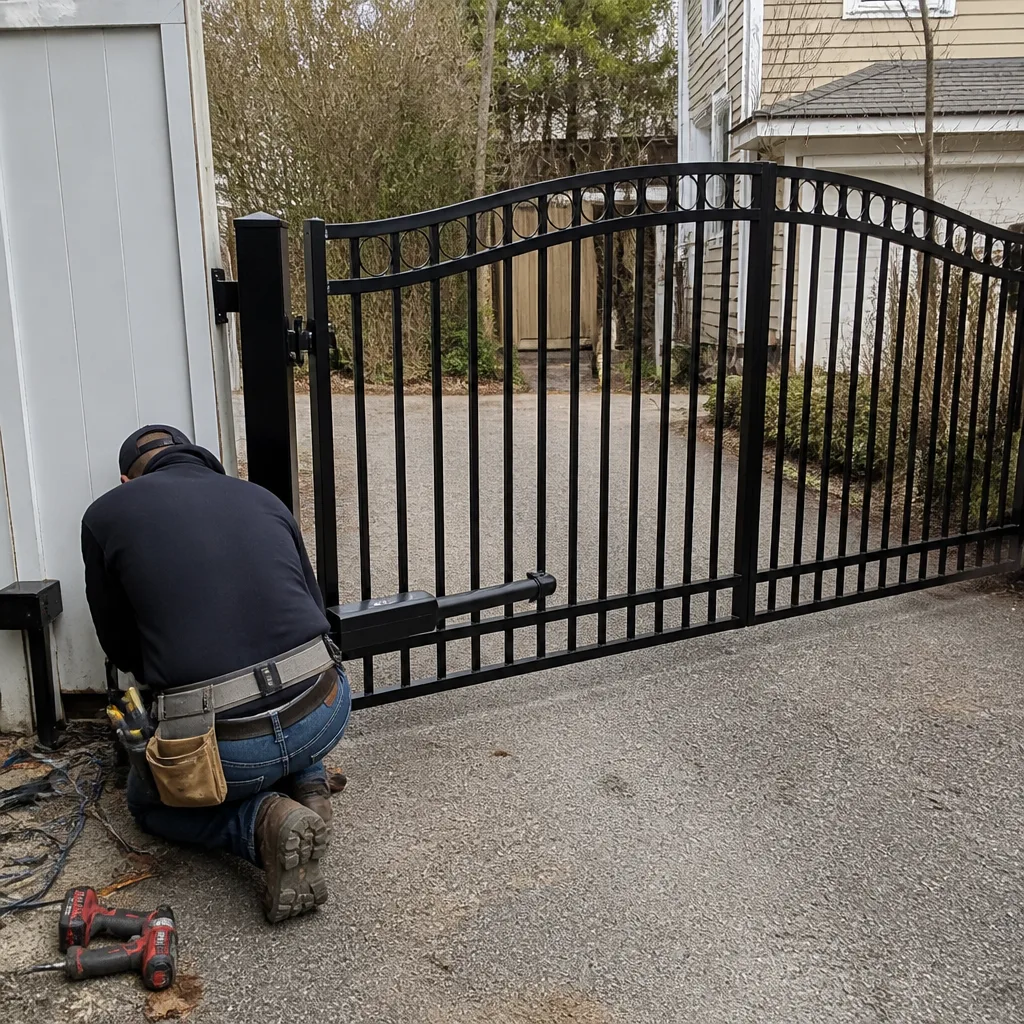
See the difference
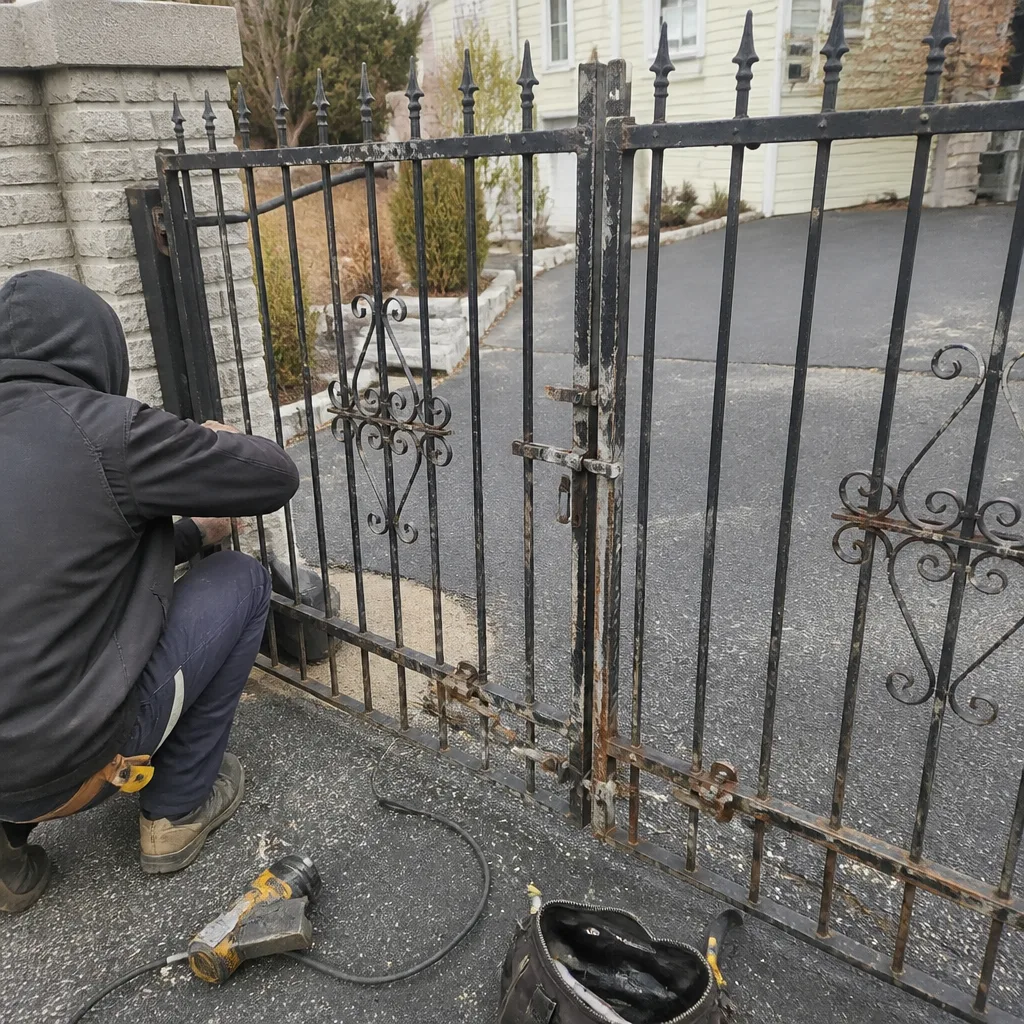 Before
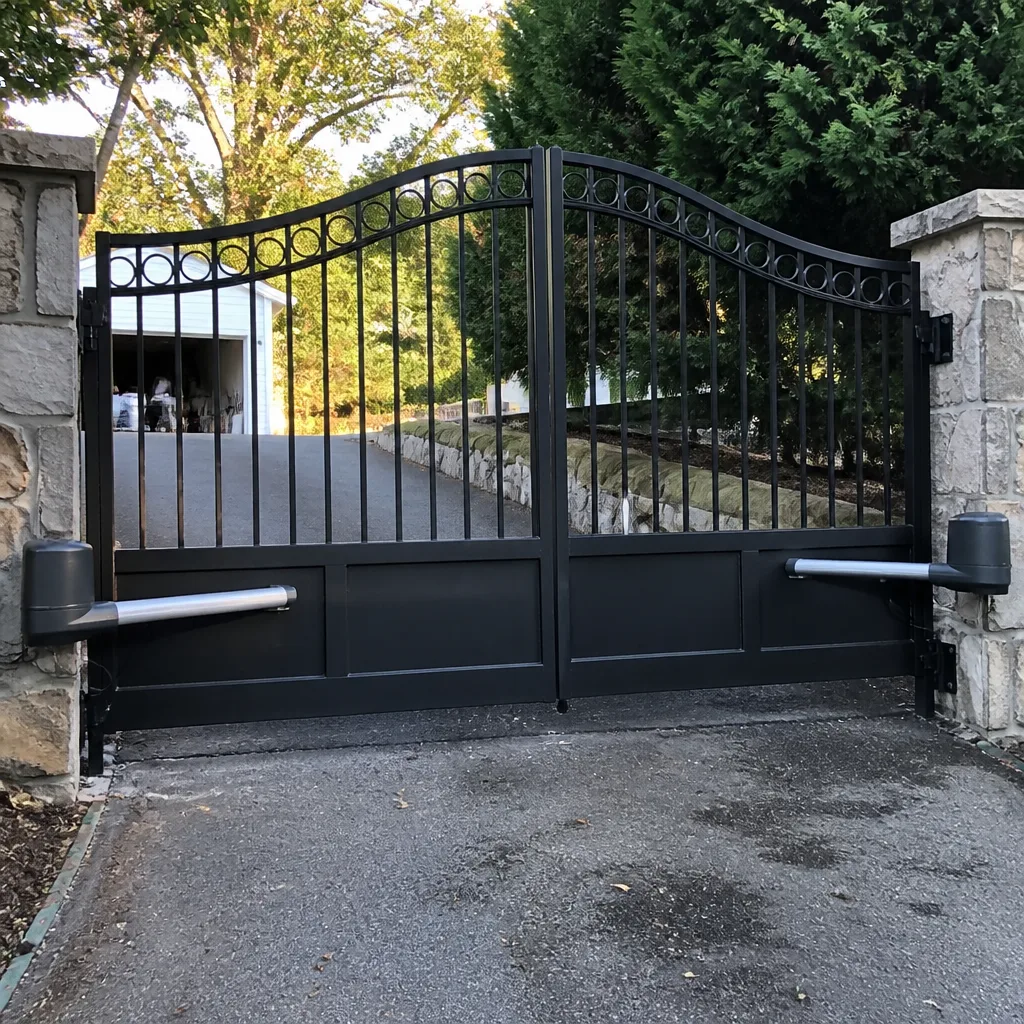 After
After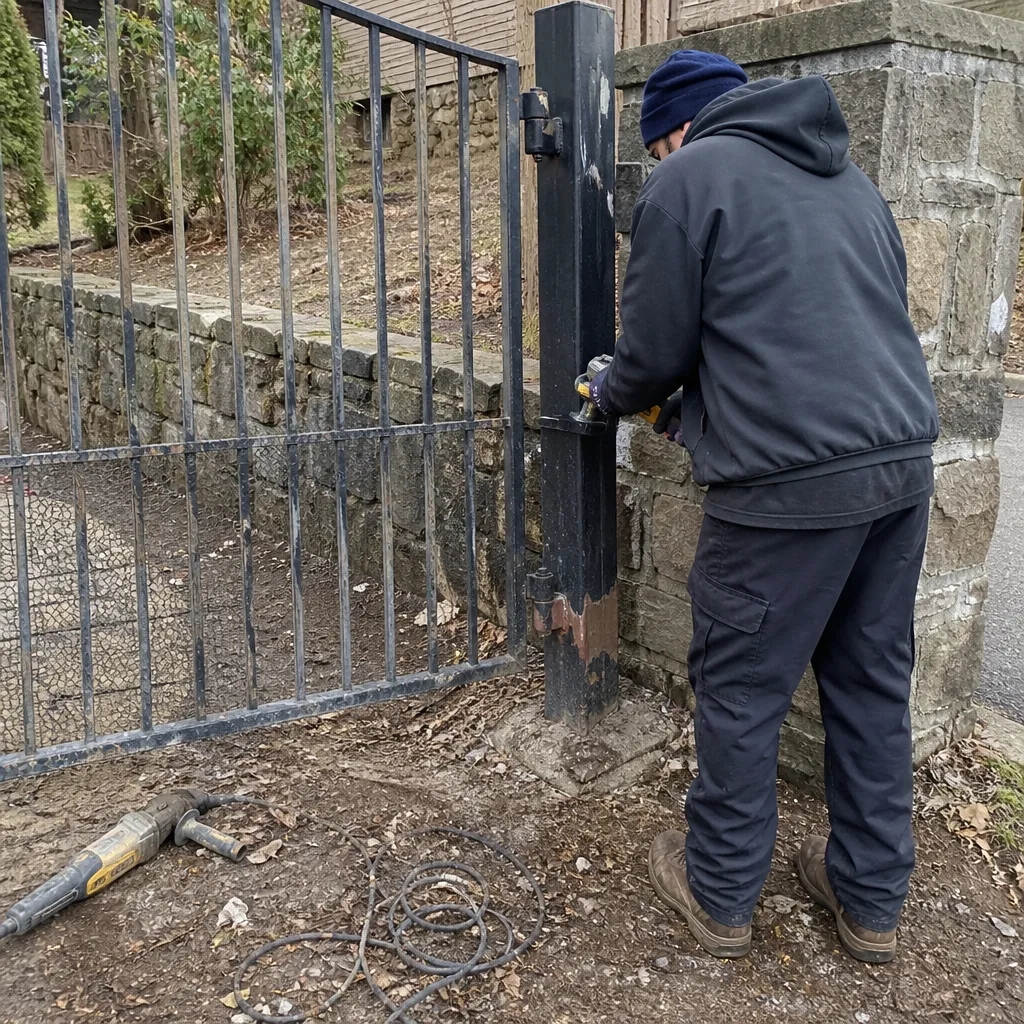 Before
 After
After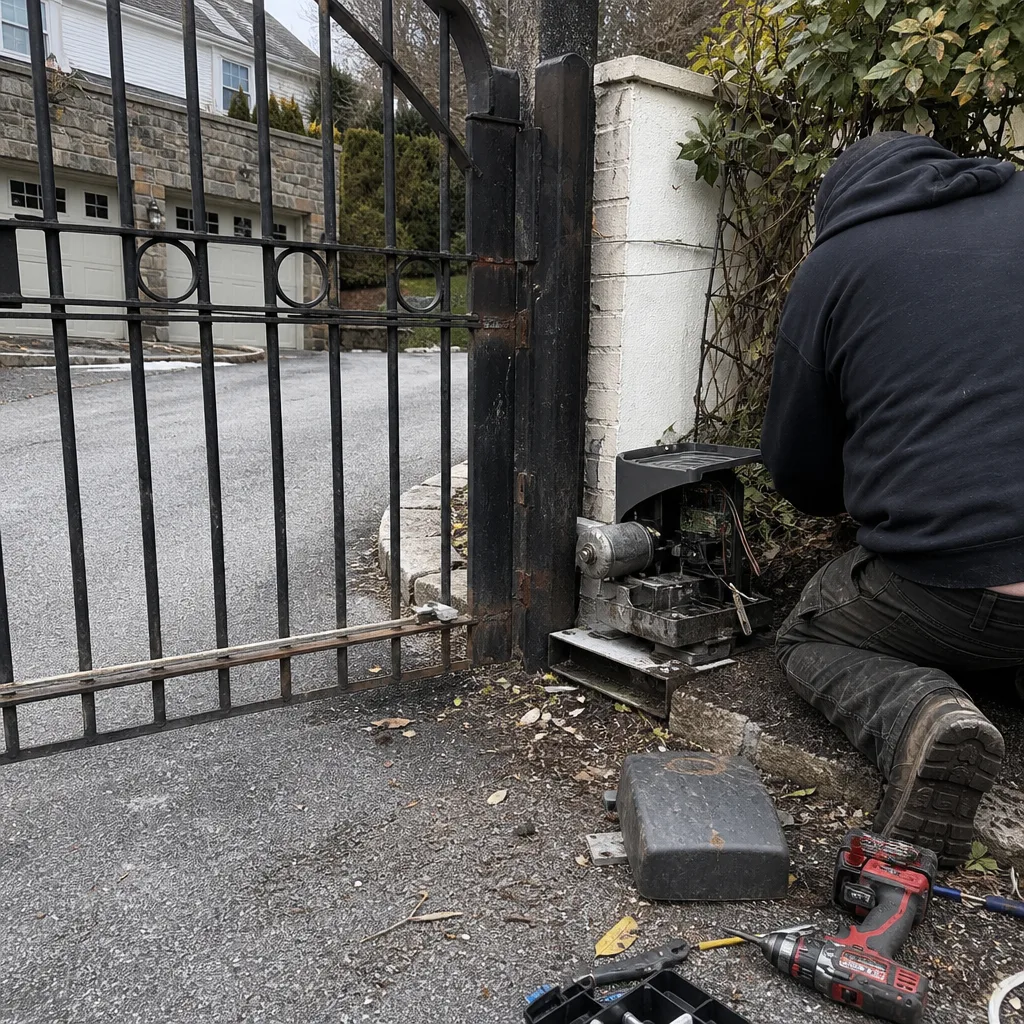 Before
 After
After