
Last updated October 16, 2026
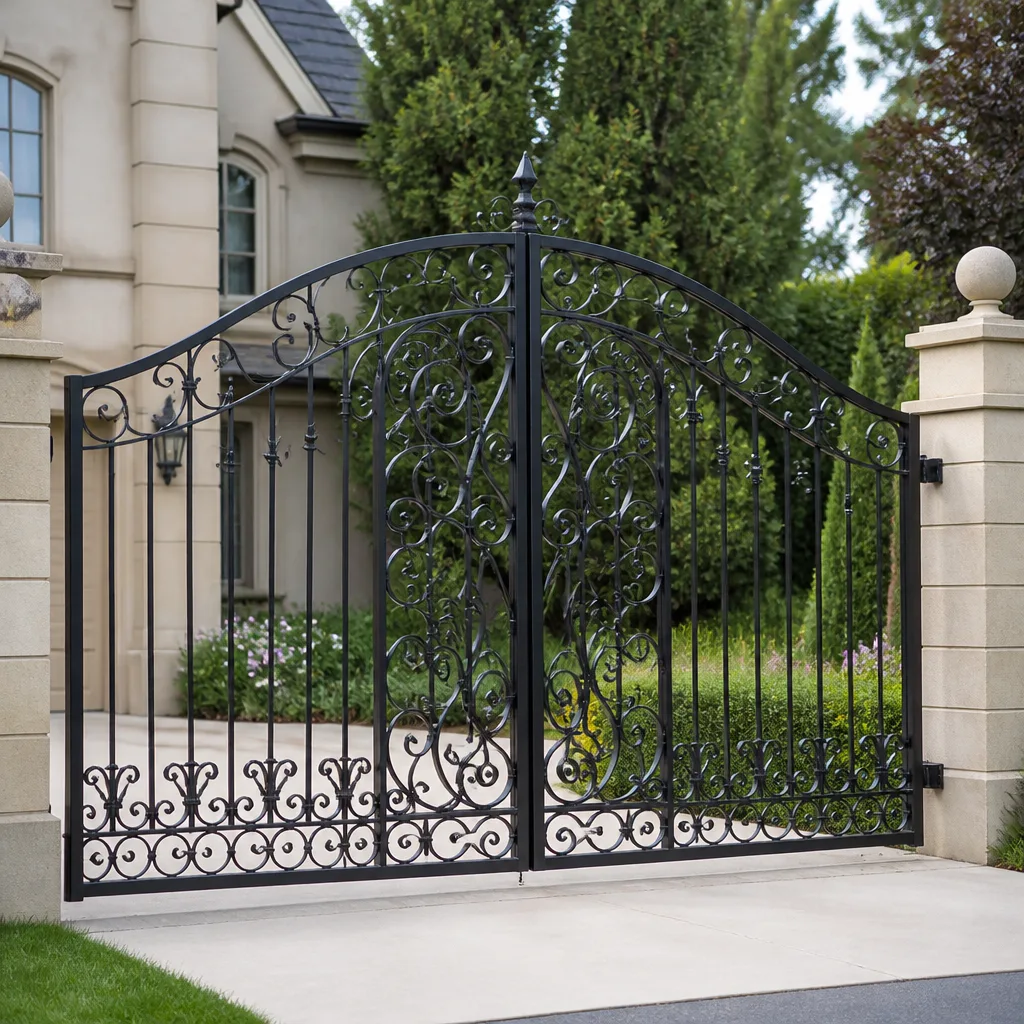 Wrought iron
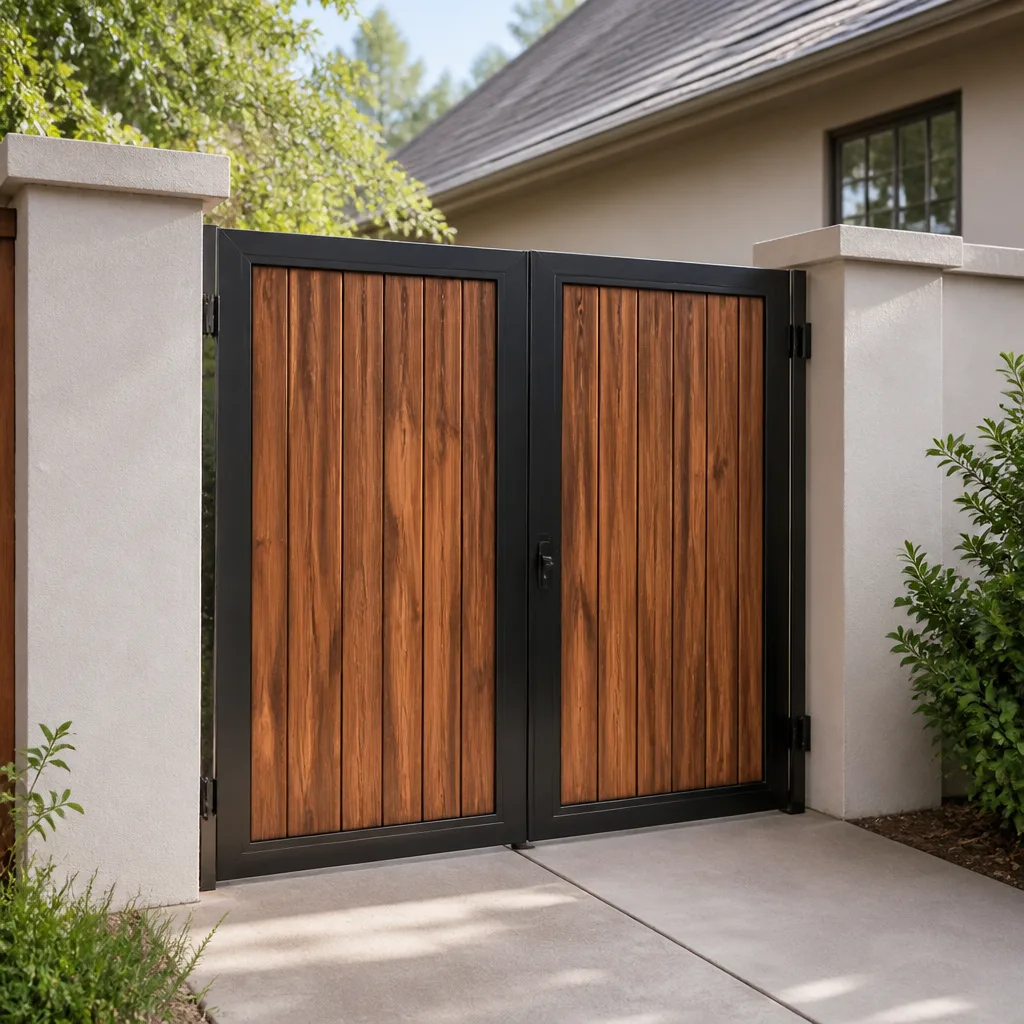 Wood & steel frame
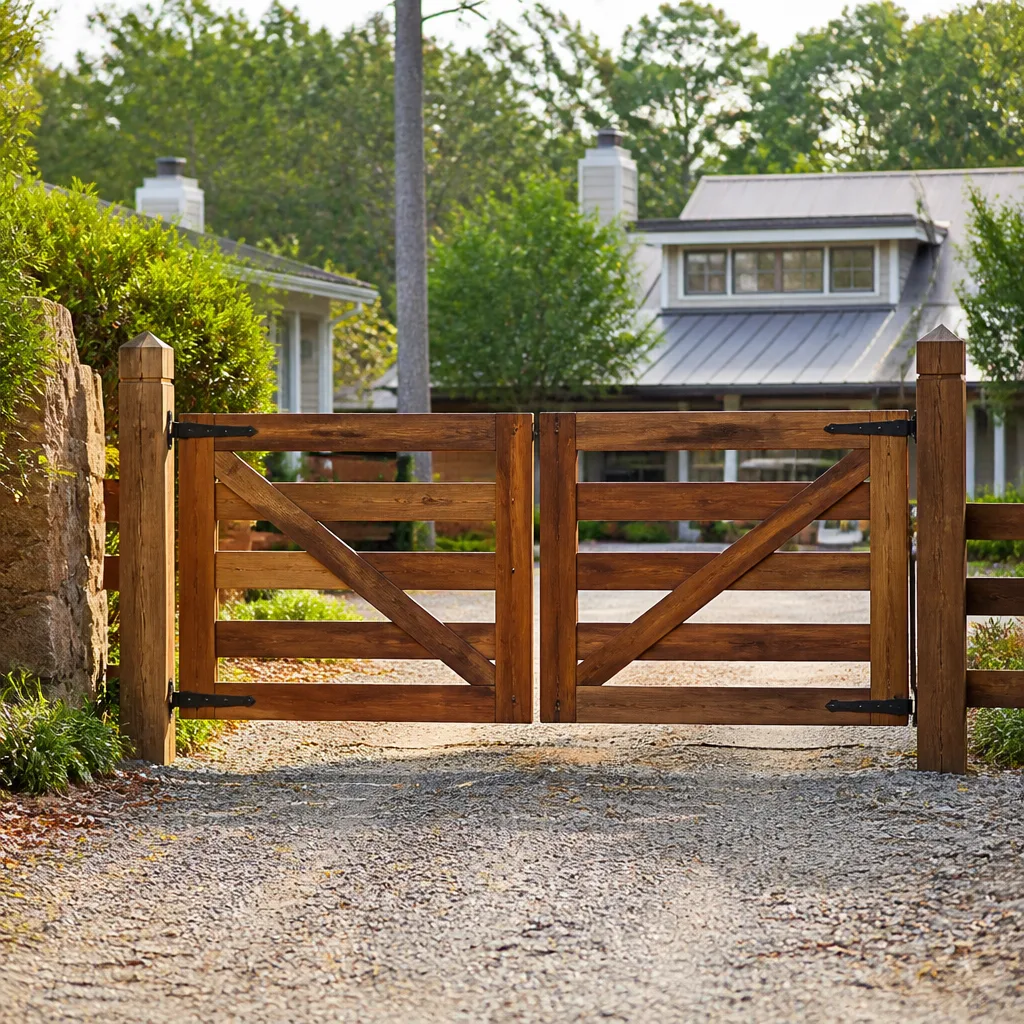 Farm & ranch
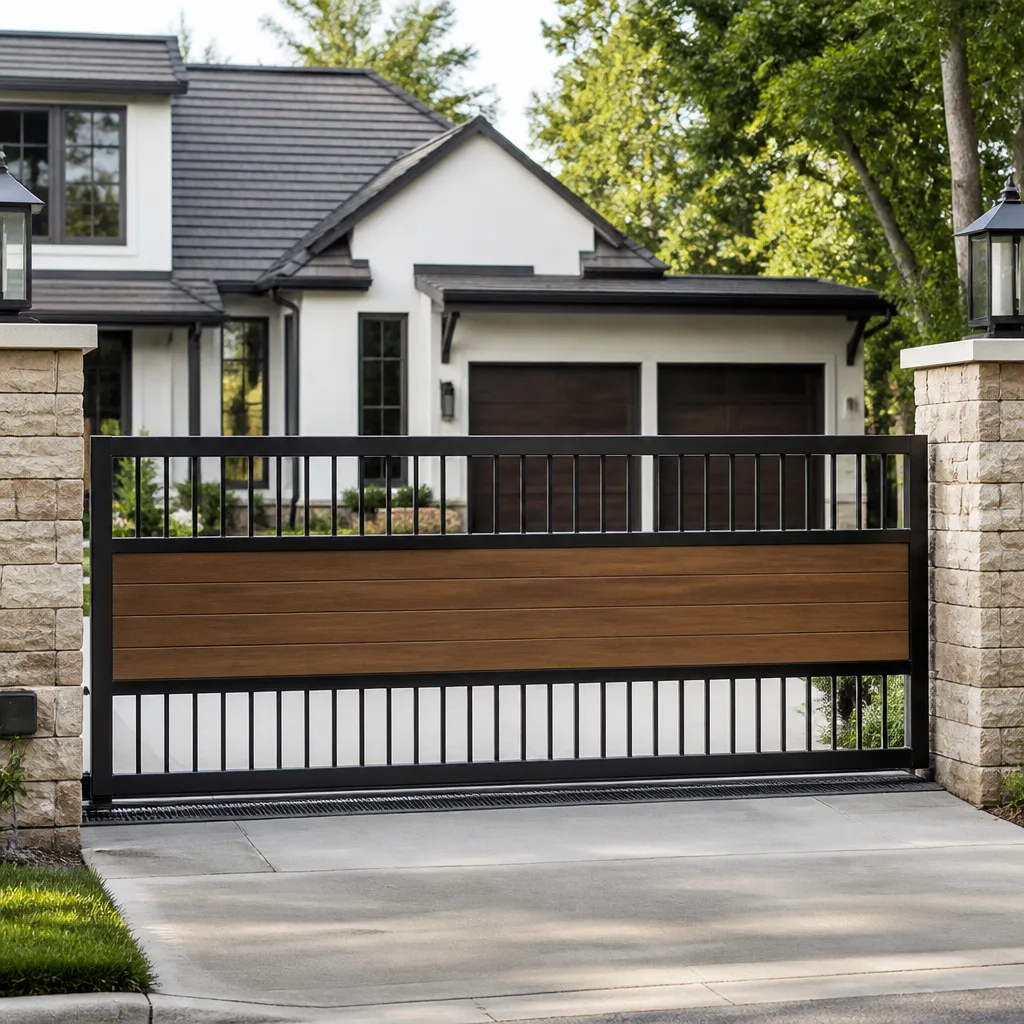 Sliding driveway gates
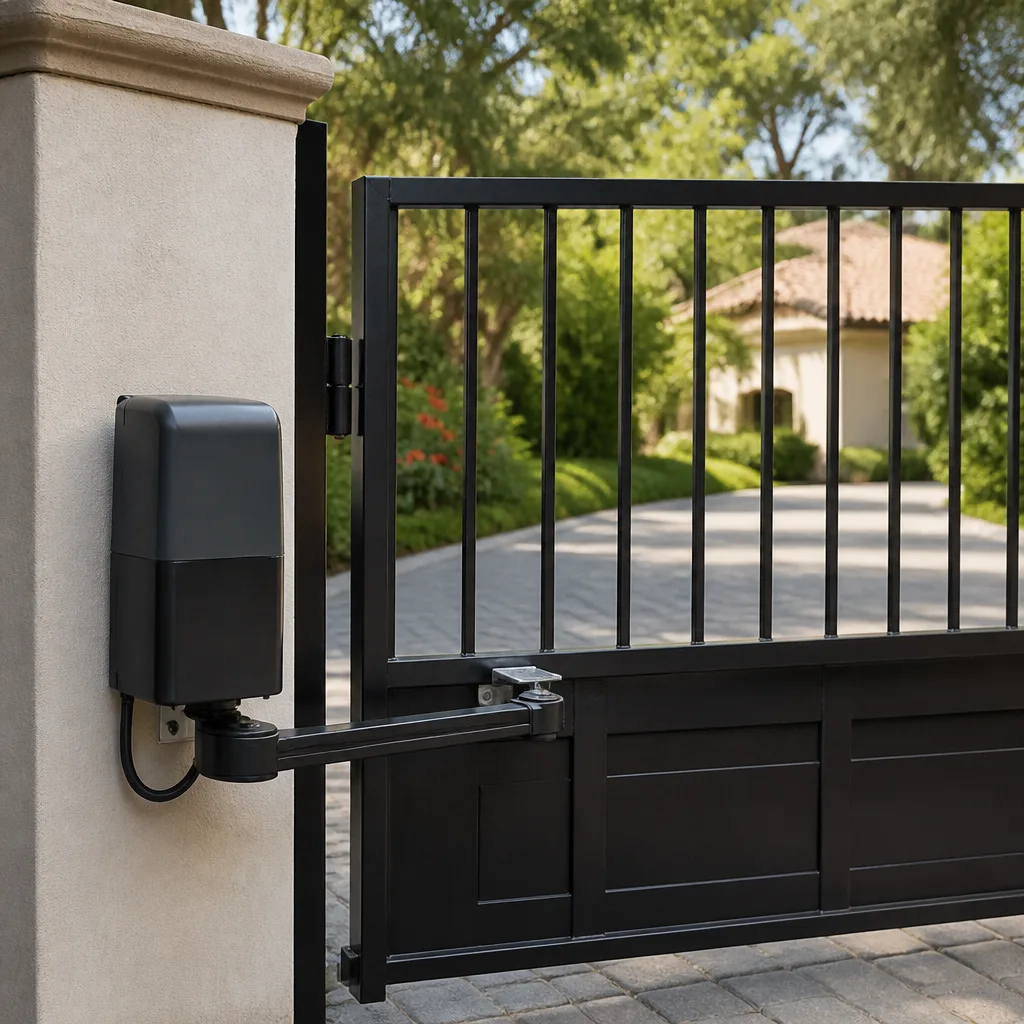 LiftMaster operators
Free on-site gate assessment - hinges, posts, and your LiftMaster or Nice gate operator checked before anything is quoted
The assessment is free and the quote is the invoice.
Get your free estimateHow to Hire a Gate Repair Contractor in Yonkers: A Step-by-Step Guide
Here’s the pattern we’ve watched play out hundreds of times across Yonkers: a homeowner’s gate stops opening on a Tuesday morning, they call the first name Google shows them, a guy in an unmarked van arrives three hours late, quotes one number over the phone and a different number at the door, and the gate fails again in six weeks. The contractor who quotes you over the phone without seeing the gate in person is the one most likely to add charges once they’re on your property. That single pattern accounts for the majority of contractor disputes in home services, and gate repair is where it shows up most aggressively. This guide gives you a concrete vetting script: specific questions, red-flag answers, and what a legitimate written quote must contain, so you hire based on evidence instead of gut feel. For our Gate Repair services, we apply this same evidence-based approach to every job.
Quick Answer
To hire a gate repair contractor in Yonkers, screen each candidate with a five-question phone interview covering opener brand experience, written quote policy, arrival window, warranty terms, and New York insurance verification. Then require a written, itemized quote before any work starts, and verify the contractor’s licensing and insurance through the New York State Department of State database before signing anything.
Styles & brands we work with
Table of Contents
- Step 1: Know What Kind of Gate You Actually Have
- Step 2: Run the Five-Question Phone Screen
- Step 3: Understand What a Legitimate Written Quote Contains
- Step 4: Verify Insurance and Licensing in New York State
- Step 5: Separate Gate Repair Specialists from Installers Moonlighting in Repairs
- Step 6: Evaluate the Warranty Before You Sign
- Step 7: What to Expect on Repair Day
- Step 8: After the Job – What a Good Contractor Leaves Behind
Step 1: Know What Kind of Gate You Actually Have
Before you call anyone, take five minutes to identify what you’re working with. Most Yonkers homeowners we talk to describe their gate as “the one that slides” or “the one with the keypad,” which doesn’t help a contractor diagnose anything over the phone. The type of gate and opener you own determines who can actually fix it.
There are three main gate types in Yonkers. The first is a sliding gate, which rolls horizontally along a track. These are common on wider driveways and in older Yonkers neighborhoods like Park Hill and Crestwood where lots are long and narrow. The second is a swing gate, which opens on hinges like a door, either as a single leaf or a pair of leaves. You’ll see these everywhere, but they’re especially common on smaller properties off Central Park Avenue. The third is a barrier arm gate, typically found at condo complexes, commercial lots, and some gated communities in Yonkers.
Then you have the opener itself. This is the motor that does the actual work, and it matters more than the gate style when you’re hiring a contractor. The opener has a brand, a model number, and a set of parts that wear out. A contractor who doesn’t know a Linear opener from a Viking opener is guessing, and you don’t want to pay someone to guess. Most gate opener repair in Yonkers involves diagnosing the specific board, limit switch, or gear inside the motor housing, not the gate itself.
Here’s what to write down before your first call:
- The gate style: sliding, swing, or barrier arm
- The opener brand (check the metal housing on the motor for a sticker)
- What the gate does when you press the button: nothing, clicking sound, partial movement, or full movement with the wrong timing
- How old the gate and opener are, if you know
- Any recent work done on the gate or nearby landscaping
This saves time and signals to the contractor that you’re not a target for vague pricing. A homeowner who can say “the Linear SLR sliding gate opener just clicks when I press the remote” gets a much more accurate response than one who says “my gate is broken.” Winter salt from Yonkers streets accelerates corrosion on slide tracks and hinge hardware. If your gate has been through a few Yonkers winters without maintenance, tell the contractor that on the phone. It changes the diagnosis. For a deeper look at protecting your gate year-round, see our guide on Seasonal Gate Repair Care for Yonkers: Year-Round Homeowner’s Guide.
Step 2: Run the Five-Question Phone Screen
This is the step that separates brand-trained technicians from generalists who happen to own a multimeter. When you call a gate repair contractor in Yonkers, run through these five questions before you book. A legitimate specialist answers them without hesitation. A generalist hesitates, deflects, or gives generic answers.
- “What opener brands do you service regularly?” Listen for specific names: LiftMaster, FAAC, BFT, Linear, Viking, Ghost Controls, DoorKing, Elite, Mighty Mule. If the answer is “all brands” with no follow-up, you’re talking to someone who will learn on your gate. If they name two or three brands confidently and admit they don’t touch certain others, that’s actually a good sign. It means they know their limits. In our experience, the contractor who says “I’ve done a few Ghost Controls boards but mostly work on LiftMaster and FAAC” is being honest. The one who says “we fix everything” is not.
- “Will you give me a written price before any work starts?” If the answer is anything but “yes, always,” end the call. A written price before work begins is the single strongest predictor of a clean transaction. Contractors who resist this are planning to bill you at the end for whatever they decide the job was worth. You want the number on the invoice to match the number you agreed to at the door. At Calder Gate Repair Yonkers home tours of our process, this is the point we emphasize most: the price is written, it’s itemized, and it doesn’t change unless the scope changes and you approve the change first.
- “What’s your arrival window, and can I track it?” In Yonkers, where traffic on the Saw Mill River Parkway can turn a 15-minute drive into an hour, vague arrival promises are common. A contractor who gives you a four-hour window is telling you they don’t value your time. Ask for a live, trackable arrival time. If they can’t provide one, that’s a red flag about how they run their operation. You wouldn’t accept a plumber who says “sometime after lunch.” Don’t accept it from a gate contractor either.
- “What does your warranty cover, in writing?” Not “do you guarantee your work,” because every contractor says yes to that. Ask what the guarantee says on paper. What’s the term, what triggers it, and what does the customer actually get if the repair fails. A meaningful answer sounds like: “If the repair fails within 365 days, we come back at no charge and fix it.” A weak answer sounds like: “Well, we stand behind our work, you’re covered if anything goes wrong.” Vague is not a warranty. Specific is a warranty.
- “Are you insured, and can I verify your New York coverage?” In New York State, contractors performing home improvement work must meet insurance requirements, but plenty of operators don’t. A contractor who gets defensive about this question or says “don’t worry about it” is telling you exactly who they are. A contractor who says “yes, I’ll send you the certificate” is operating like a legitimate business. We give our insurance information to every customer who asks, no friction.
Run this screen on two or three contractors before you commit. You’ll be amazed at how quickly the field narrows.
Step 3: Understand What a Legitimate Written Quote Contains
A written quote is not a number scrawled on a business card or texted to you with a thumbs-up emoji. It’s a document you can hold someone to. Here’s what a legitimate pre-job written quote for gate repair in Yonkers must itemize:
- Labor: The cost of the technician’s time, usually quoted as a flat rate for the repair rather than an hourly estimate with no ceiling. If a contractor quotes hourly without a cap, you’re accepting an open-ended bill. Ask for a flat rate or a firm cap.
- Parts with part numbers: Not “control board” but “LiftMaster LA400 board, part number K1D8387-1CC.” Part numbers let you verify what was actually installed and compare pricing if you want. A contractor who refuses to list part numbers is either disorganized or planning to install something different from what you agreed to.
- Warranty terms: The exact length of the coverage, what it covers (parts, labor, or both), and what the process is if something fails. If the quote says “warranty included” without terms, ask for the terms in writing.
- Arrival window: Not just the day but the window, and ideally a live tracking link. This is a commitment, not a preference.
- Total price: One number that includes everything. Not “plus parts” or “plus disposal fees” or “plus travel.” A legitimate quote is the number you’ll pay. We write every quote with a single total at the bottom, and that’s the number on the invoice. No surprises, no “forgot to mention” charges.
If the quote is missing any of these elements, push back before you approve the work. A contractor who can’t produce an itemized written quote before touching your gate is a contractor who can produce whatever number they want after it’s fixed. This is the single most common complaint pattern in gate repair nationally, and Yonkers is no exception. For a full breakdown of what to expect, read The Complete Guide to Gate Repair in Yonkers. Around the Cross County Parkway corridor, we’ve spoken with homeowners who paid $800 for what should have been a $275 limit switch replacement, simply because they approved work based on a verbal estimate and had no documentation to dispute the final bill.
Most gate repair in Yonkers jobs fall into predictable price brackets. A limit switch replacement typically runs $180 to $340. A control board replacement runs $350 to $750 depending on brand and model. A full opener replacement is $1,200 to $2,800 installed. These are the ranges you should expect. If a quote comes back dramatically higher or lower, ask why.
Step 4: Verify Insurance and Licensing in New York State
This step takes ten minutes and can save you tens of thousands of dollars if something goes wrong on your property. In New York State, home improvement contractors are subject to specific requirements, and gate repair falls under this umbrella when the work involves installation or modification to your property.
Here’s the exact process:
- Ask for the contractor’s certificate of insurance (COI). This is a one-page document issued by their insurance carrier. It lists the types of coverage and the policy limits. You want to see general liability coverage, and you want the certificate to be recent, not from 2021. Legitimate contractors send this in minutes. Contractors who stall are telling you something.
- Verify the business entity exists. Search the company’s name in the New York State Department of State Corporation and Business Entity Database. This is free, public, and updated in real time. You’re looking for an active status and a filing date that matches what the contractor told you. A contractor who’s been “in business for 20 years” but has a corporation filed in 2023 is lying about something.
- Check the business address. The entity record will list a principal address. If it’s a P.O. box in another state, that’s a yellow flag. If there’s no physical address anywhere, that’s a red flag. You want to hire someone with an actual presence. Not necessarily a storefront, but a real address where a real business operates.
- Ask about workers’ compensation coverage. If the contractor sends employees onto your property and they’re injured, you don’t want to be the party who pays for that. In New York, workers’ compensation requirements vary by business structure, but a legitimate contractor has an answer. “We’re covered, here’s the certificate” is the answer you want.
One clarification for Yonkers homeowners: this isn’t about being paranoid. It’s about the fact that gate repair involves electrical work, moving metal, and sometimes high-tension hardware. If a technician gets injured on your property or damages your gate and the contractor has no insurance, you’re absorbing that cost. Ten minutes of verification is the cheapest insurance you’ll ever buy.
Step 5: Separate Gate Repair Specialists from Installers Moonlighting in Repairs
Here’s an important distinction that most hiring guides miss: the company that installed your gate is not necessarily the company that should repair it. These are different skills, different tools, different diagnostic patterns, and different warranty implications.
A gate installer’s job is to measure, pour concrete, mount hardware, run power, program the opener, and hand you the remote. It’s a construction job with a programming component. A gate repair technician’s job is to diagnose what went wrong months or years later. That means troubleshooting circuit boards, tracing wiring faults, reading error codes, identifying gear wear, and knowing which parts fail on which brands under which conditions. The installer’s knowledge is wide. The repair specialist’s knowledge is deep.
Here’s why this matters for your warranty. When an installer does repair work, they’re typically using installation-grade parts and their warranty is tied to the original installation contract. If they didn’t install the gate originally, their repair warranty may be thin or nonexistent, because repairs aren’t their revenue model. They’d rather sell you a new gate. A dedicated repair specialist lives or dies on whether the repair holds, because that’s the entire business.
Ask a simple question: “What percentage of your work is repairs versus new installations?” A repair specialist will say most or all of it. A company that does “everything” is optimized for replacement, not repair, and the incentive structure reflects that. We are a dedicated electric gate repair in Yonkers operation inside the Relay Home Co. family. We don’t install new gates. We fix the ones you already own. That focus means our diagnostic process, parts inventory, and technician training are all built around one goal: making the existing gate work correctly for a long time.
Another signal: ask about the diagnostic process. A repair specialist will walk you through how they approach a problem. They’ll talk about checking the limit switch first, then the board, then the wiring. They’ll name the components. A generalist will say “we’ll take a look and figure it out.” The difference is whether the person on the phone knows what they’re looking for before they arrive.
Step 6: Evaluate the Warranty Before You Sign
Warranties in the gate repair industry are all over the place, and most of them are weak. Here’s how to read what you’re actually being offered.
The strongest warranties have three characteristics. First, they name a term in days. Not “we stand behind our work,” but “365 days.” A number means the contractor is willing to put real money behind the claim, because they’re betting the repair will hold for at least that long. If the term is 30 days, that’s a contractor who expects the repair to fail in month two. If there’s no term at all, you’re not getting a warranty, you’re getting a slogan.
Second, they cover labor and parts. Some warranties cover the part but not the labor to install the replacement. Read carefully. A warranty that covers “parts only” means you’re paying $150 in labor to have a $40 part replaced when it fails. A real warranty covers the whole repair.
Third, they trigger a defined response. If the repair fails, what happens? The contractor returns at no charge. That’s the answer you want. If the warranty language is vague about what the customer actually gets, assume the customer gets nothing.
Our warranty at Calder Gate Repair Yonkers is specific because we want you to hold us to it. Every repair carries the 365-Day Done Right Promise: if the repair isn’t right within 365 days, we return at no charge and make it right. That’s in writing on every job we do. There’s also a free second visit if the repair fails, no diagnostic fee, no “well, it’s a different problem now” conversation. If we fixed it and it failed, we fix it again on our dime. That’s the standard. Anything less is a contractor hedging.
In Yonkers specifically, warranty durability matters because of the climate. Winter freeze-thaw cycles stress gate hardware, and salt from the streets accelerates corrosion on tracks and hinges. A repair that holds through spring might fail in February if the underlying issue wasn’t fully addressed. A 365-day warranty forces the contractor to account for the full seasonal cycle, not just the first two weeks after the repair.
Step 7: What to Expect on Repair Day
You’ve done the screening, verified the insurance, got the written quote, and booked the job. Now here’s what a professional repair visit actually looks like, so you can spot when something’s off.
A legitimate contractor arrives on time, or close to it, and communicates if there’s a delay. In Yonkers, traffic on the Saw Mill, the Bronx River Parkway, and Central Park Avenue can be unpredictable. A good contractor builds that into their scheduling and updates you if they’re running behind. You get a live arrival time you can track, not a four-hour window where you’re trapped at home waiting for a knock.
The technician arrives in a marked vehicle and a uniform. They’re not wearing a hoodie with a tool pouch strapped to their belt. They introduce themselves by name, confirm what they’re there to do, and walk the property with you before opening the gate housing. They ask questions about the gate’s behavior. They don’t immediately start replacing parts.
They diagnose before they quote. A professional technician opens the housing, tests the components, and then explains what’s wrong in plain language. “Your limit switch, which is the sensor that tells the gate when to stop, has failed, which is why the gate opens too far and pushes against the post.” That’s a diagnosis. If a technician can’t explain what’s wrong in terms you understand, that’s not a communication style issue. That’s a knowledge gap.
Then, and this is important, the price is locked before any work starts. If the diagnostic reveals something different from what was quoted on the phone, the technician writes a new, itemized quote right there and gets your approval before turning a single bolt. You sign or approve the quote, and only then does the work begin. That’s the Relay Standard operating procedure at our company, and it’s the standard you should hold any contractor to: live arrival time, written price before work, and a digital invoice you can review and pay from a link when the work is done.
For repairs involving high-tension springs or cables on swing gates, be aware that these components are under significant tension and can cause serious injury if handled incorrectly. A professional technician knows how to release and reset this tension safely. This is not a DIY project, and a contractor who treats it casually is not a contractor you want on your property.
Step 8: After the Job – What a Good Contractor Leaves Behind
The repair is done and the gate works. Here’s what a professional contractor leaves you with, and what to ask for if any of these are missing.
First, a written invoice that matches the approved quote. Same number, same line items, same part numbers. If the invoice is higher than the quote and nobody explained and got your approval for the change, that’s a dispute you’re entitled to have. A legitimate contractor’s invoice matches the quote exactly.
Second, the warranty in writing. Not a verbal promise, a document. It states the term, what’s covered, and how to trigger it. If your contractor’s invoice says “warranty included” with no terms, call and ask for the terms in writing before you pay. We include the 365-Day Done Right Promise on every invoice, in plain language, with the phone number to call if something goes wrong.
Third, an explanation of what was done. A good contractor tells you what was replaced, why it failed, and what you can do to extend the life of the repair. That might mean keeping the track clean of winter salt, checking the hinges for wear, or adjusting the gate’s travel limits after a season of settling. This advice is part of the job, not a courtesy.
Fourth, a receipt for the parts used. Part numbers matter. If a control board fails on day 300 of a 365-day warranty and the contractor says “that’s a different board than the one we installed,” the part number on your invoice settles that conversation. Demand part numbers in your documentation, not just “replaced board.”
Fifth, before-and-after photos. A professional contractor documents the work. This protects both parties. In Yonkers, where property lines are tight and gates sit close to sidewalks, having visual documentation of what the gate looked like before and after the repair prevents disputes about damage that wasn’t caused by the technician. The Relay Standard includes before-and-after photos with every job, so you can see exactly what was done.
Common Mistakes to Avoid
- Hiring based on the first Google result without screening. Google rankings reflect SEO investment, not repair skill. A generic handyman with a slick website can rank above a specialist who does great work. The phone screen in Step 2 catches this gap.
- Accepting a phone quote as binding. A contractor who quotes you over the phone hasn’t seen the gate. That number is a guess. Require an on-site diagnosis and a written quote before you pay anything. Contractors who refuse this are planning to revise the number upward.
- Skipping the insurance verification because the contractor “seems nice.” Personable doesn’t mean insured. Ten minutes on the New York Department of State database can prevent a five-figure liability surprise if something goes wrong on your Yonkers property.
- Approving work without itemized pricing. “We’ll take care of it and send you the bill” is how disputes are born. If the line items aren’t clear on paper, the final number won’t be clear either.
- Choosing the lowest quote without comparing scope. A $150 diagnostic fee from one contractor versus a $300 flat-rate repair from another isn’t an apples-to-apples comparison. Look at what’s included. The low quote might not include parts, or labor, or the parts that commonly fail on your specific opener brand, whether that’s Viking, Ghost Controls, DoorKing, or Linear.
- Ignoring the warranty terms because you trust the contractor. Trust the document, not the handshake. If the warranty isn’t written, it doesn’t exist. A 365-Day Done Right Promise means something specific. “We back our work” means nothing at all.
- Waiting until the gate completely fails before calling. If your gate is opening slower than usual, making unusual grinding noises, or stopping at odd positions, call while the problem is small. In Yonkers, where a security gate is often the only barrier between the street and your backyard or driveway, a gate that fails completely leaves your property open until a technician can get there.
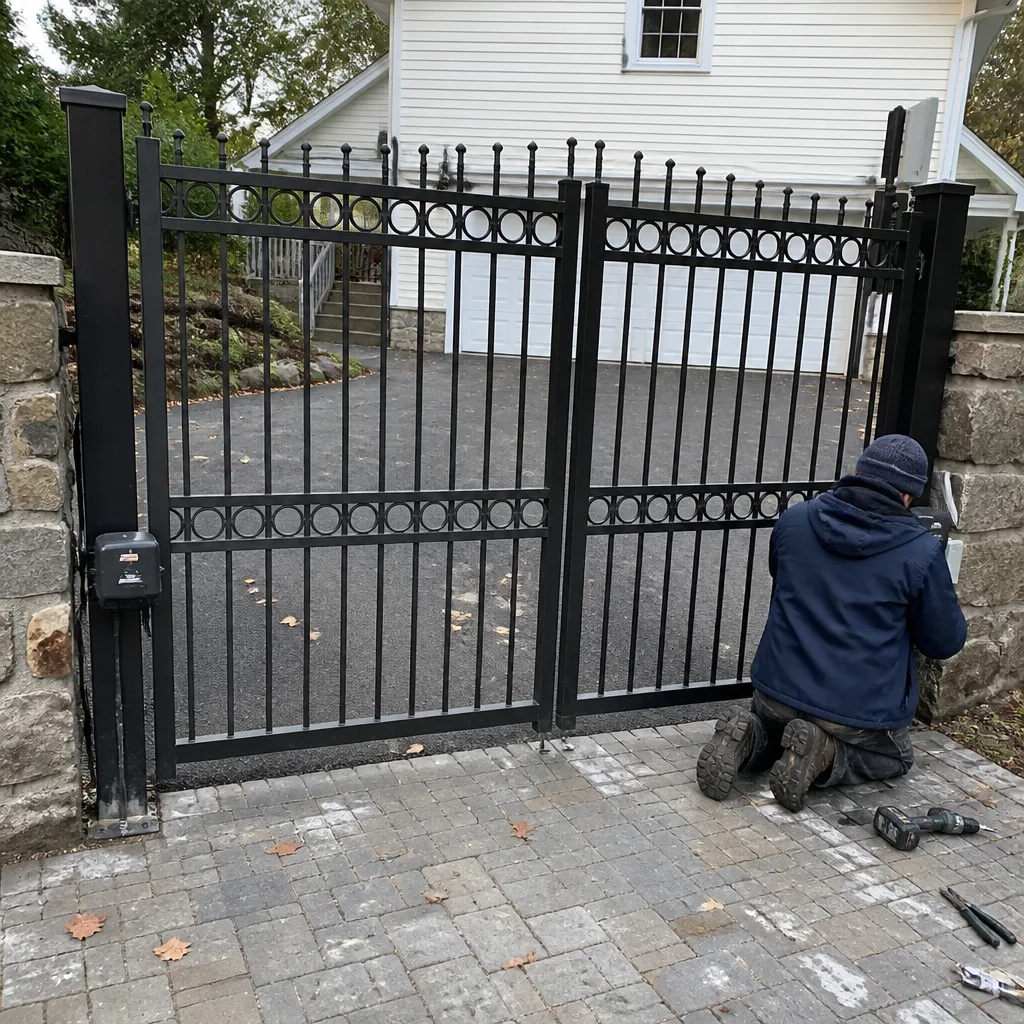
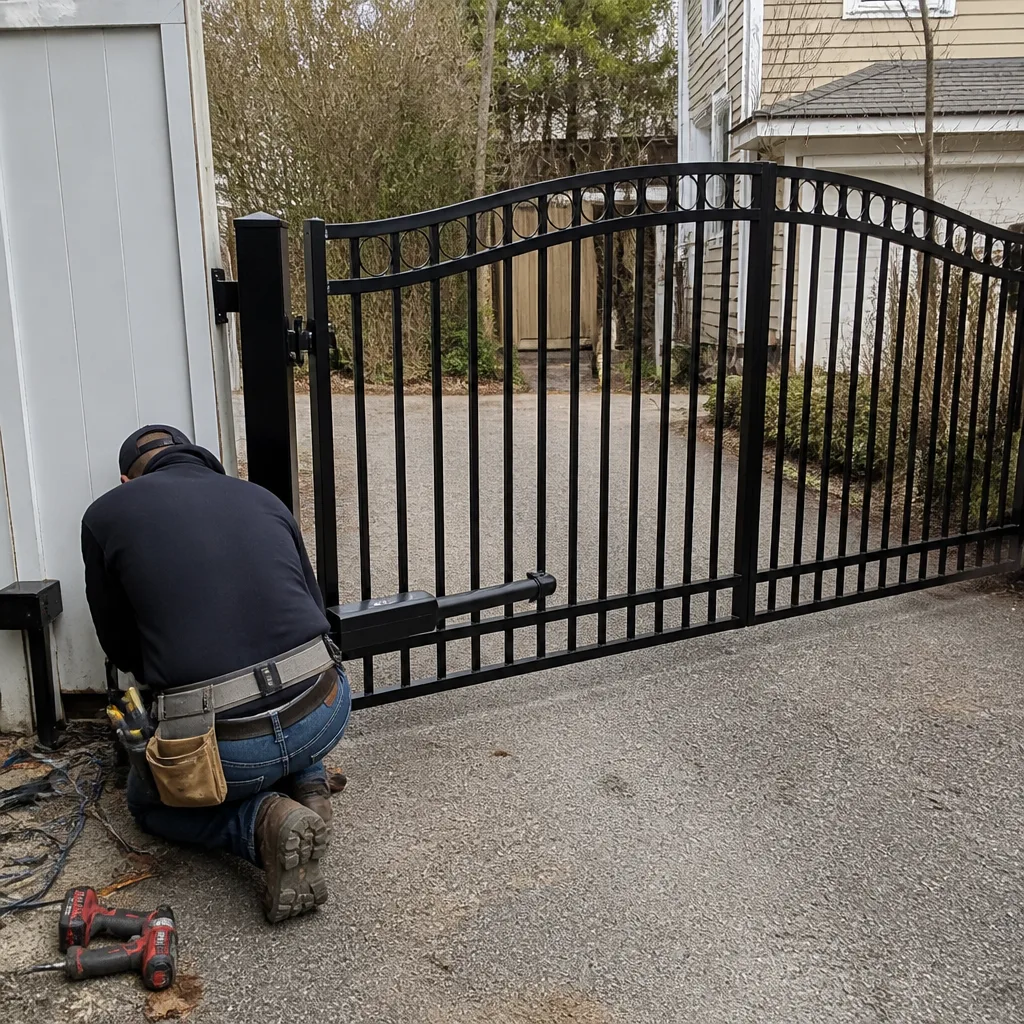
See the difference
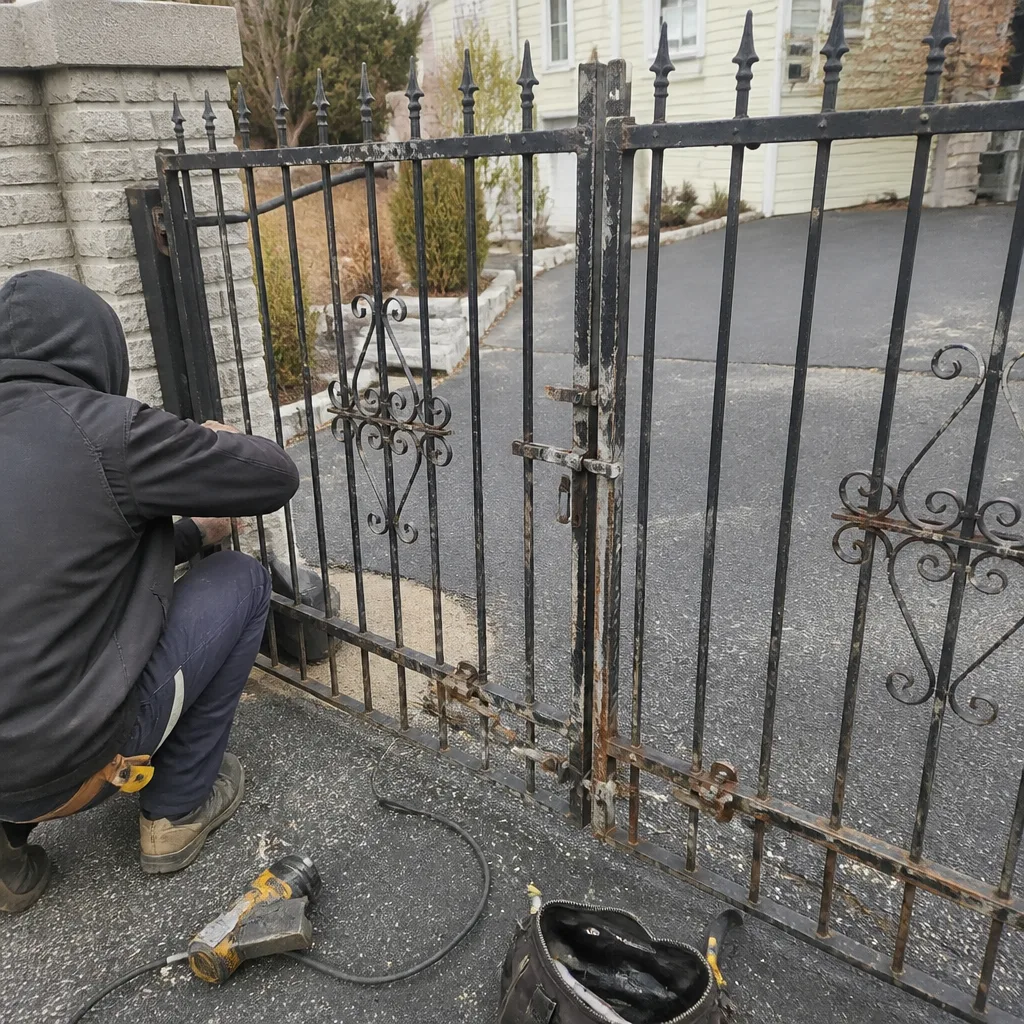 Before
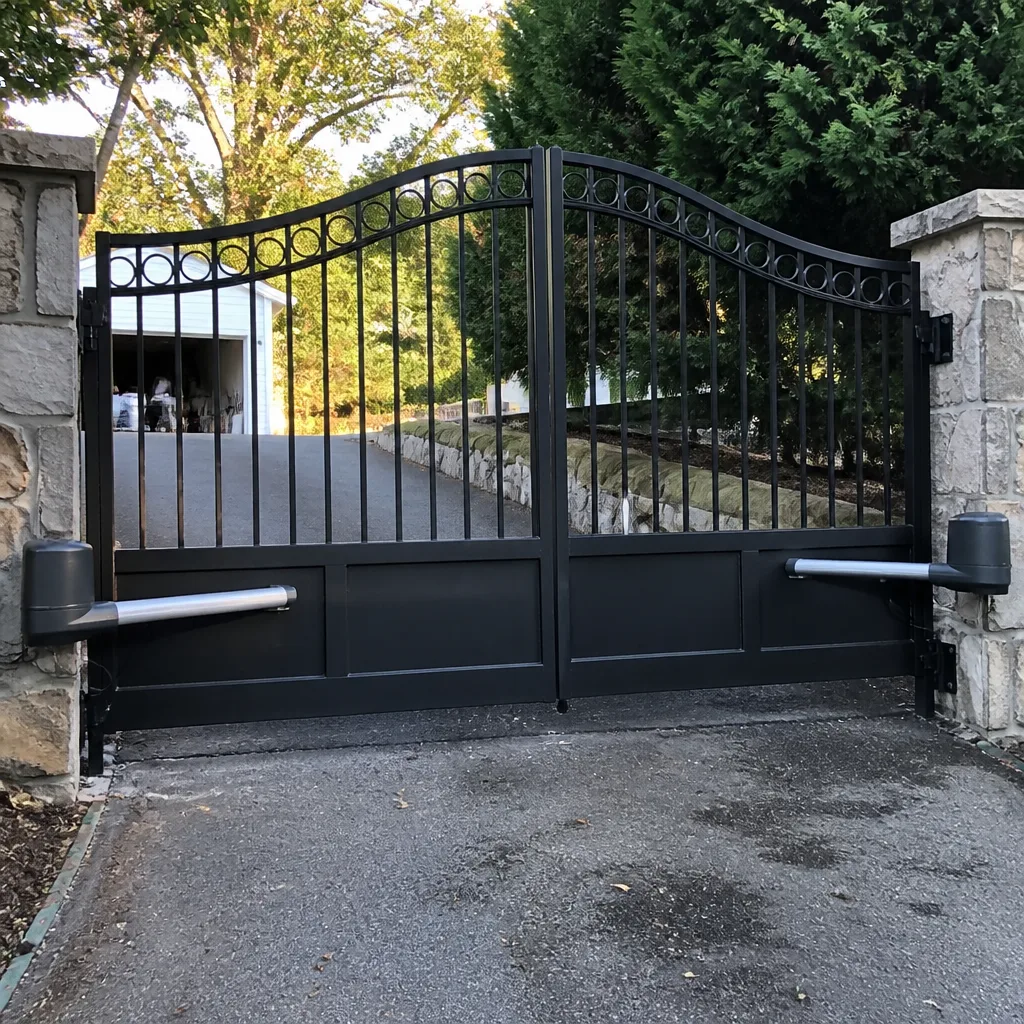 After
After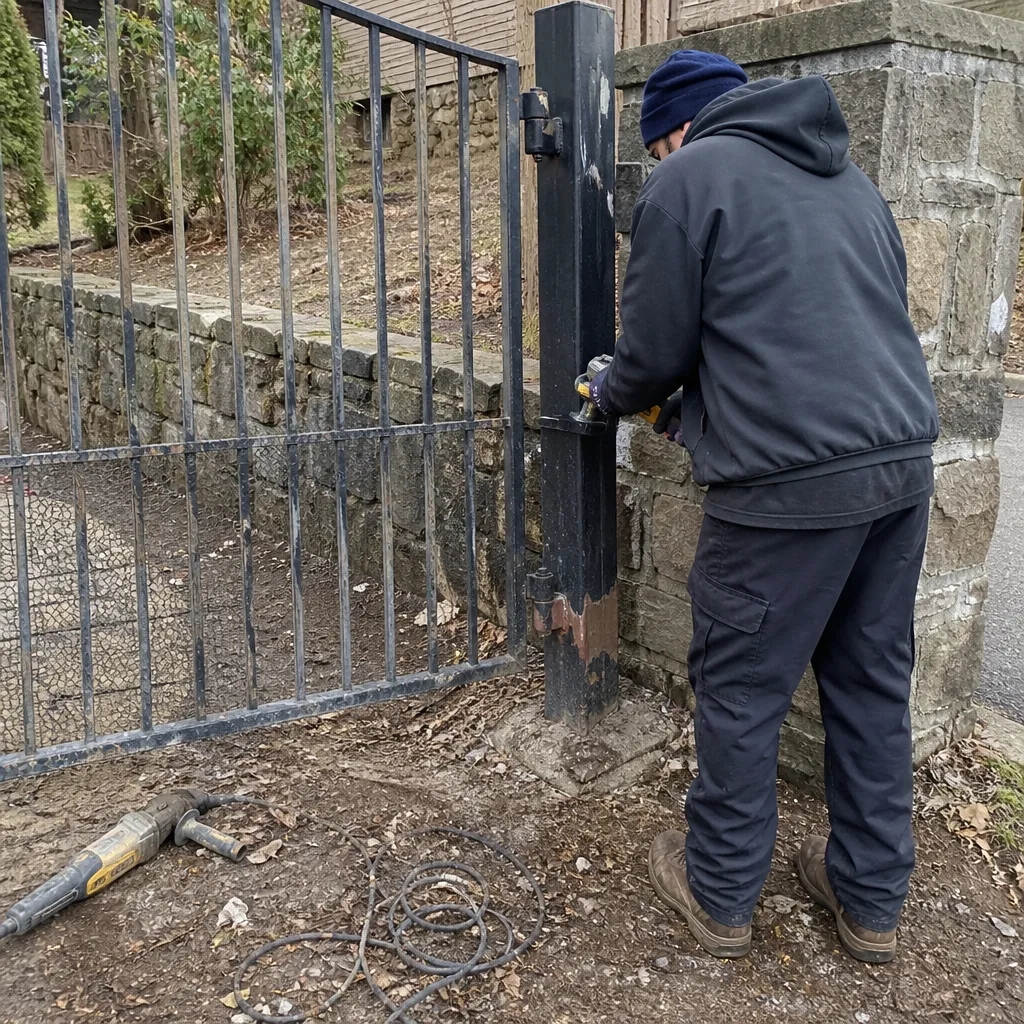 Before
 After
After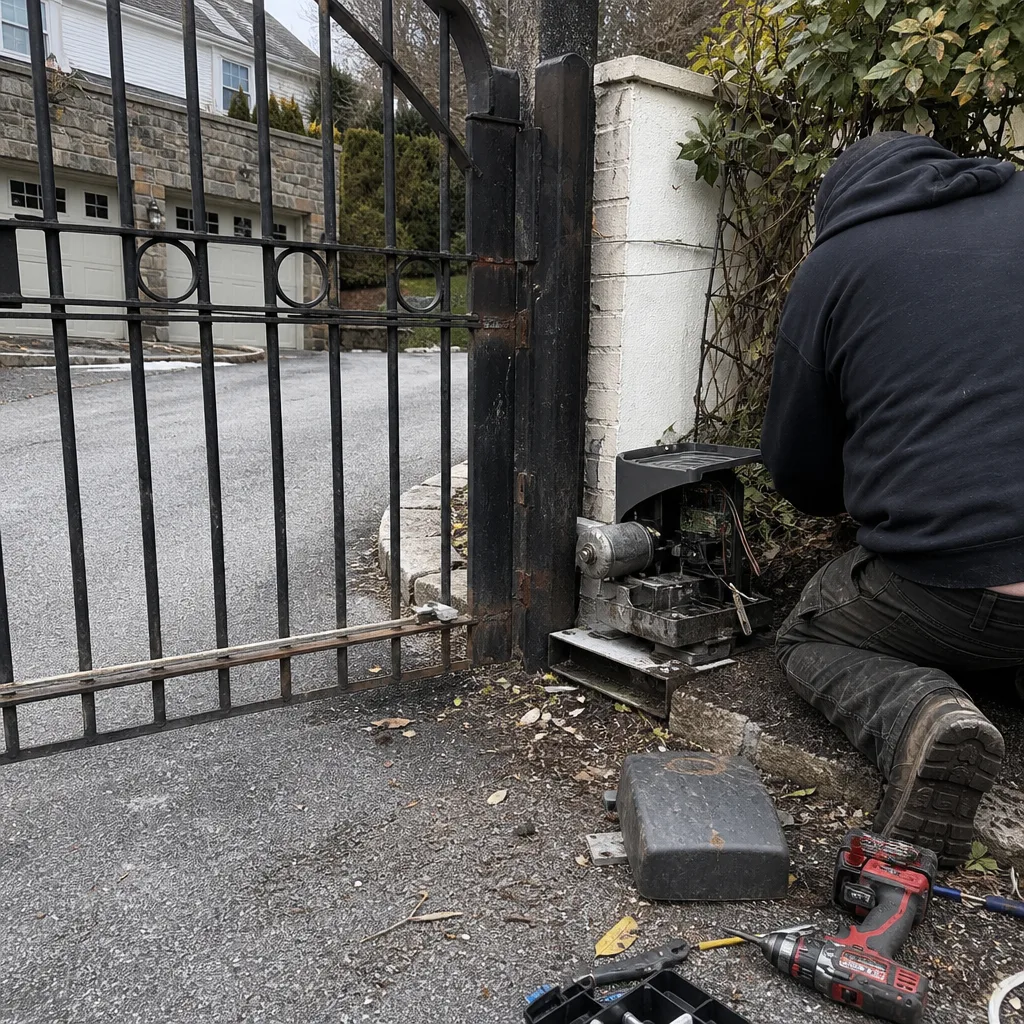 Before
 After
AfterWhen to Call a Professional
Some gate problems are obvious: the opener is dead, the gate won’t move, the remote stopped working. But some failures are quieter, and catching them early is the difference between a $250 repair and a $1,500 replacement. Call a professional when you notice: the gate moving slower than it used to, a new grinding or clicking sound during operation, the gate stopping short of fully open or closed, the remote working intermittently from different distances, the gate reversing direction on its own, or visible rust or wear on the track, hinges, or chain. These are not normal aging. They’re component failures in progress. Any attempt to repair a heavy gate yourself carries real risk, especially with spring-loaded hinges and high-tension cables. The cost of a professional diagnostic is always cheaper than the cost of an injury or a botched repair that damages the opener. Calder Gate Repair Yonkers offers free estimates in Yonkers, call (585) 496-2148 and a live person will take your call, day or night.
Frequently Asked Questions
Most gate repairs in Yonkers run between $180 and $750 depending on the component, with limit switch replacements at $180 to $340, control board replacements at $350 to $750, and full opener replacements at $1,200 to $2,800 installed. Brands like Linear, Viking, and Ghost Controls have different parts pricing, so the exact number depends on what’s on your gate. Call (585) 496-2148 for an exact quote, estimates are free.
For emergency repairs, yes, many Yonkers technicians can dispatch same-day for severe failures like a gate stuck open or an opener that won’t respond. Call (585) 496-2148 and a live person will tell you the soonest available arrival time, no voicemail, no callback.
A competent technician should be fluent in the major brands found in Yonkers homes: LiftMaster, FAAC, BFT, Linear, Viking, Ghost Controls, DoorKing, Elite, and Mighty Mule. If a contractor can’t name specific boards, error codes, and common failure points across at least a few of these brands, they’re not a specialist.
A written quote locks in the labor, parts, and total price before the technician touches your gate, so the number you approve is the number you pay. Contractors who resist written quotes are protecting their ability to bill you more at the end. Never approve a repair without one.
Ask for a certificate of insurance (COI) showing current general liability coverage, then verify the business name in the New York State Department of State Corporation and Business Entity Database. A legitimate contractor provides both in minutes. Anyone who stalls is telling you something about their operation.
An installer builds gates. A repair specialist diagnoses and fixes them. The specialist’s expertise runs deeper: circuit boards, limit switches, wiring faults, gear wear, and brand-specific failure patterns. The installer’s incentive is replacement. The specialist’s incentive is repair that holds, because that’s the entire business. At Calder Gate Repair Yonkers, repairs are all we do. Call (585) 496-2148 for a free estimate.
The Bottom Line
Hiring a gate repair contractor in Yonkers comes down to evidence over vibes. Ask the five screening questions. Require a written, itemized quote before any work starts, with part numbers and a total that matches the invoice. Verify insurance through New York State records. Pick a repair specialist over an installer moonlighting in repairs. And insist on a warranty with a number, not a slogan. If the contractor checks all those boxes, you’ve hired someone who knows what they’re doing. If they balk at any of them, you’ve learned something useful before any money changed hands. The phone screen costs you five minutes. The alternative costs more.
Written by Nico Alvarez, Owner at Calder Gate Repair Yonkers, serving Yonkers since 2009.