
Last updated October 16, 2026
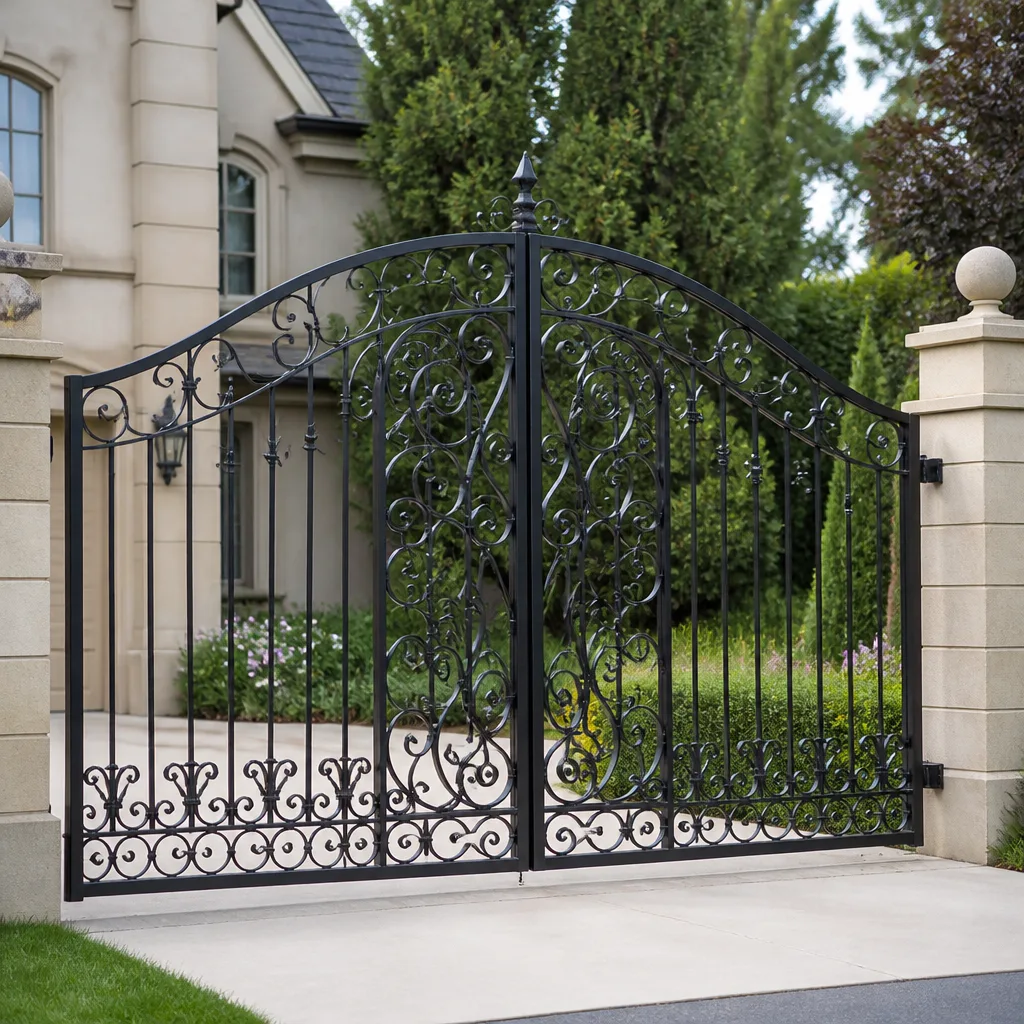 Wrought iron
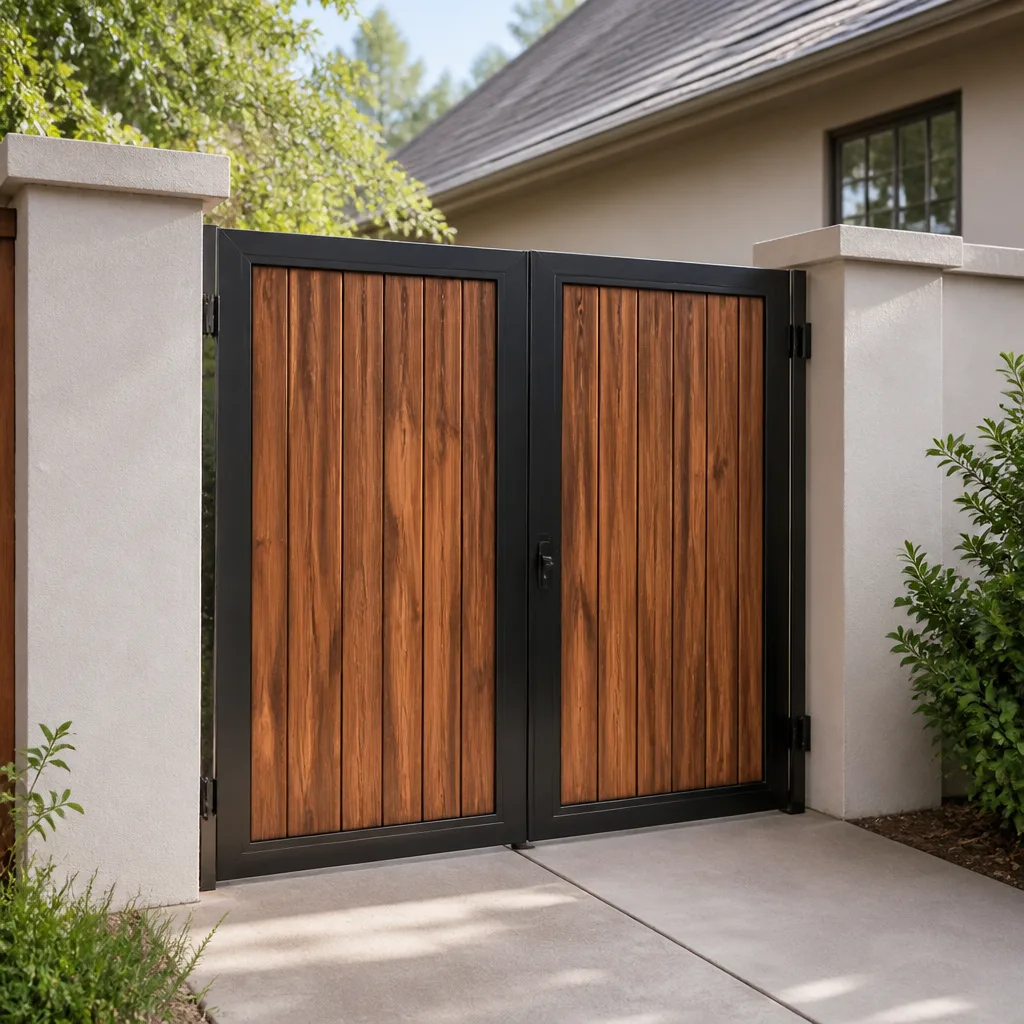 Wood & steel frame
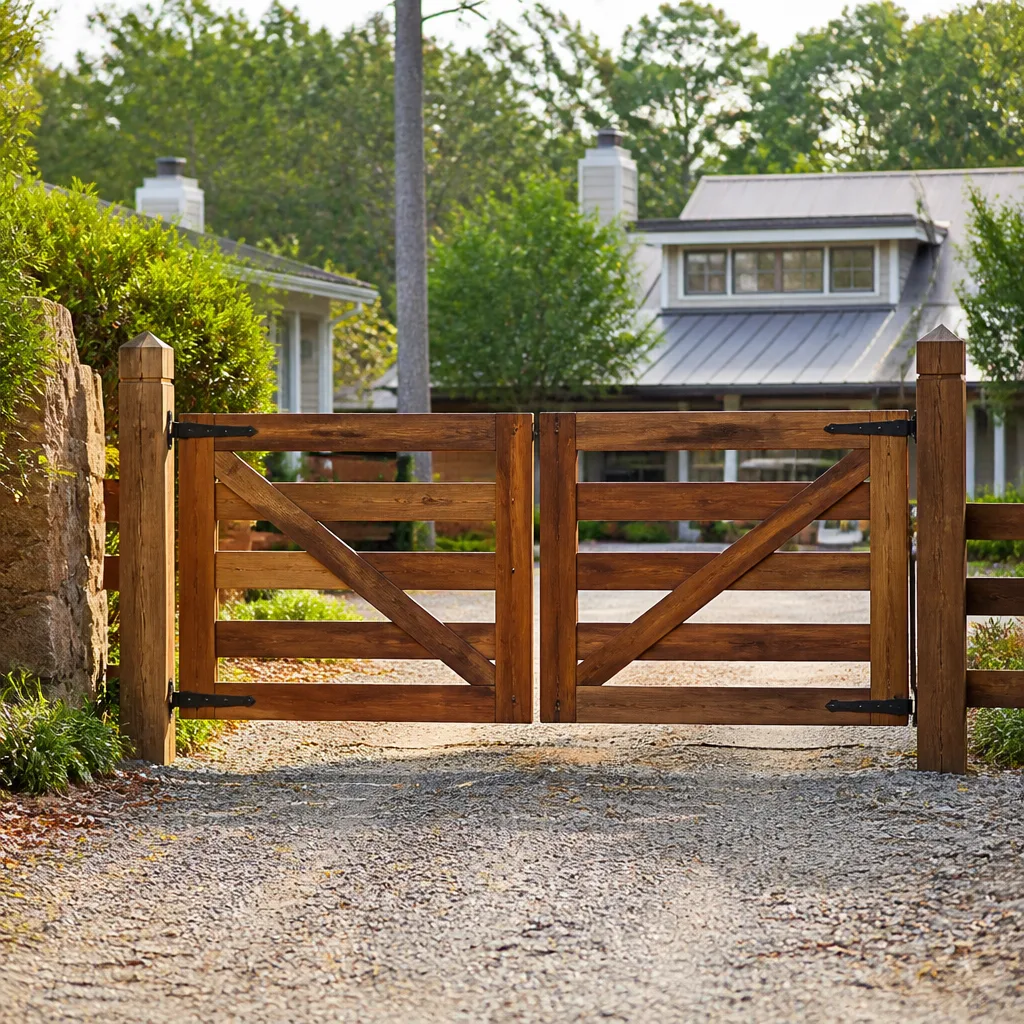 Farm & ranch
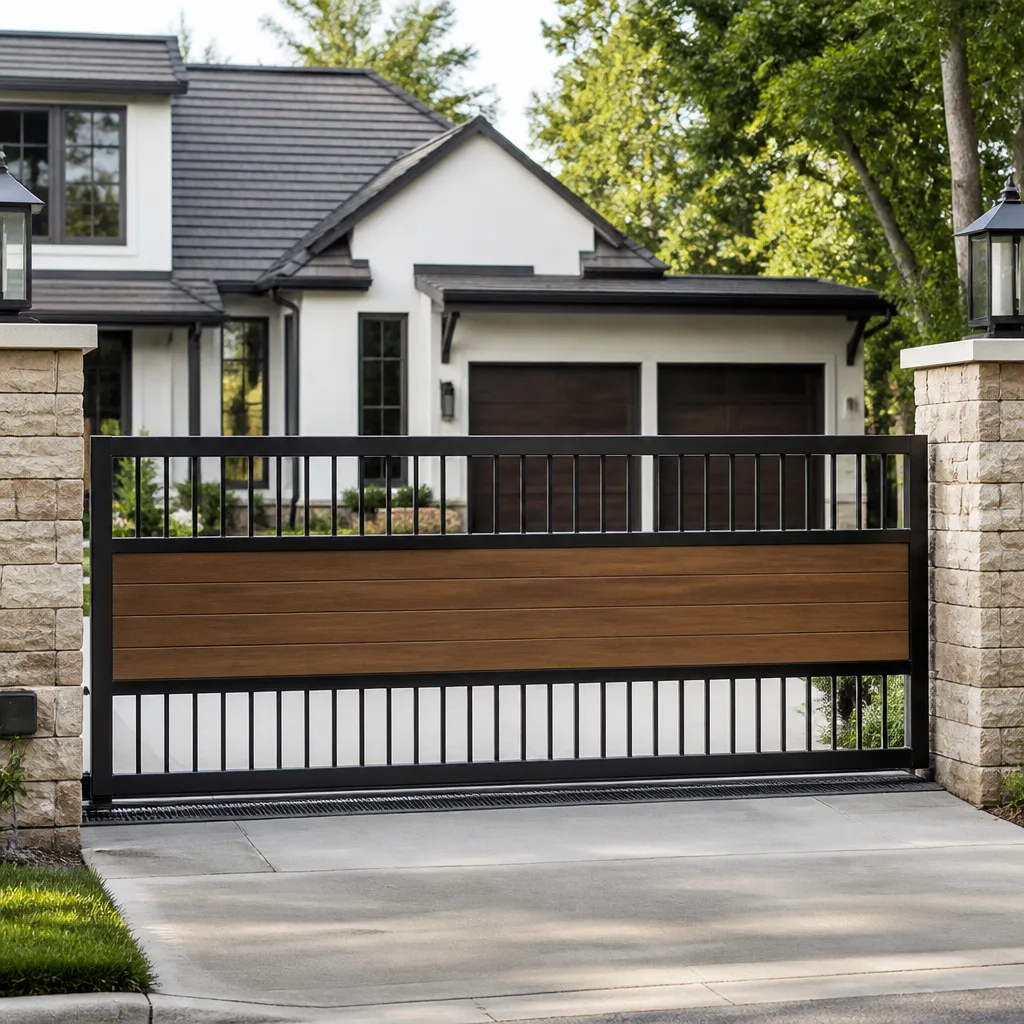 Sliding driveway gates
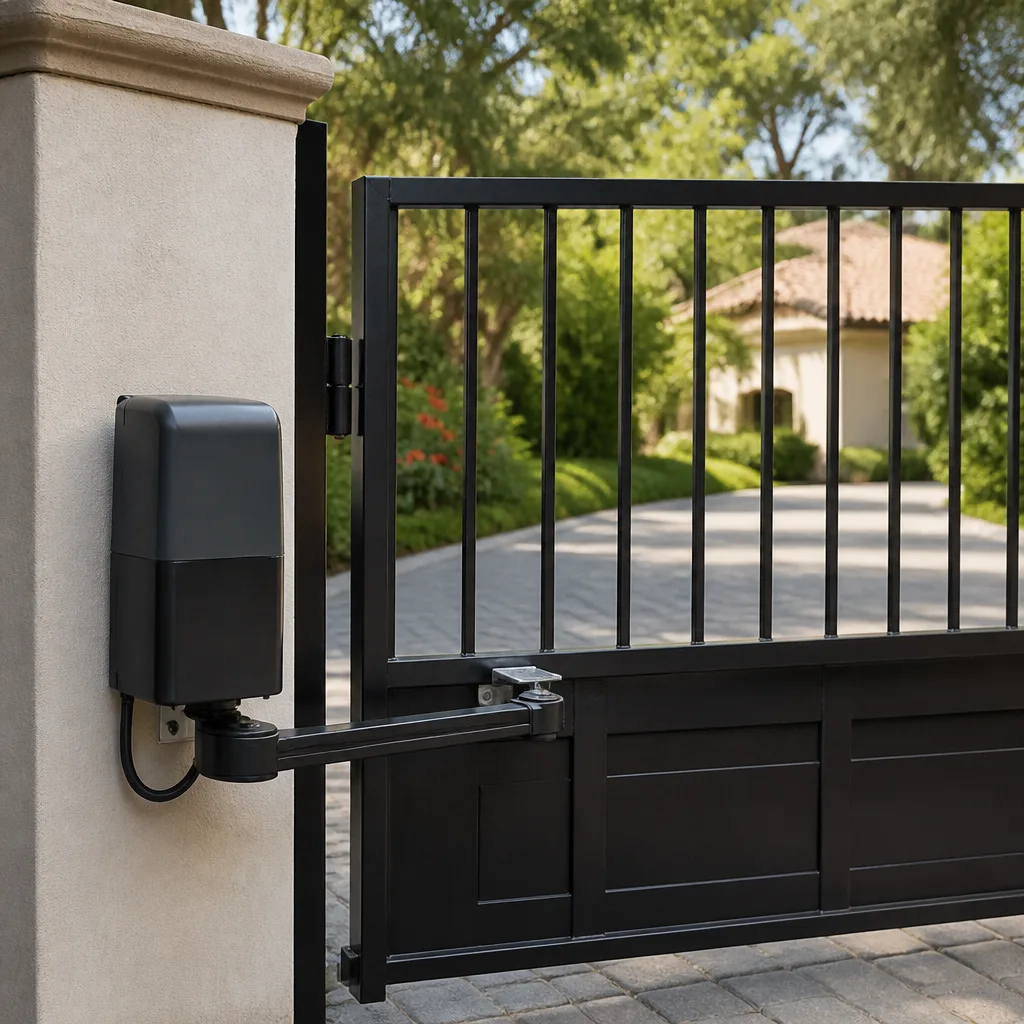 LiftMaster operators
Free on-site gate assessment - hinges, posts, and your LiftMaster or Nice gate operator checked before anything is quoted
The assessment is free and the quote is the invoice.
Get your free estimateGate Repair Permits, Codes & Inspections in NY: What You Need to Know
Most Yonkers homeowners assume gate repair is like fixing a fence post: buy the parts, do the work, move on. That assumption is exactly how a simple opener swap turns into a code violation that surfaces two years later during a home sale inspection, forcing you to tear out work you already paid for. New York building codes treat automated gates differently than manual ones because a 400-pound moving gate is a legitimate safety hazard when installed wrong. This guide walks through what actually requires a permit in Yonkers and Westchester County, which code sections govern gate automation, how HOA rules can override municipal minimums, and what an inspector will check before signing off. For related reading, see our Gate Repair Warning Signs: A Yonkers Homeowner’s Reference Guide.
Quick Answer
Replacing an existing gate opener with a like-for-like unit usually does not require a permit in most New York municipalities, but changing a gate’s swing direction, adding a new automated operator where none existed, installing or relocating safety sensors, or adding access control wiring often does. The trigger is whether the work counts as “repair” or “alteration” under local code, and Yonkers follows the New York State Building Code with local amendments. When in doubt, call your local building department before cutting concrete, because undoing unpermitted work is always more expensive than the permit fee.
Styles & brands we work with
Table of Contents
- Repair vs. Alteration: Where Yonkers Draws the Line
- New York State Code Sections That Apply to Automated Gates
- UL 325 Compliance: What It Actually Means in Plain Language
- HOA Overlay: When Community Rules Are Stricter Than City Code
- Who Pulls the Permit: Contractor or Homeowner?
- Post-Repair Inspection: What Inspectors Look For
- Step-by-Step: Getting a Gate Permit in Yonkers
- What Permits and Inspections Cost in Westchester County
Repair vs. Alteration: Where Yonkers Draws the Line
The single most important distinction in gate permitting is the line between “repair” and “alteration.” New York code treats them differently, and the financial consequences of guessing wrong are real. In Yonkers, as in most of Westchester County, a repair means restoring something to its original condition using the same or equivalent parts. Swapping a failed circuit board in a DoorKing opener for the same board model is a repair. Replacing a bent hinge with a new hinge of the same size and rating is a repair.
An alteration means changing the system’s configuration, function, or capacity. Here’s where homeowners get caught:
- Changing swing direction: Converting a gate that swings inward to one that swings outward is an alteration. The load path changes, the hinge forces change, and the safety sensor coverage changes. This triggers review in Yonkers.
- Adding automation where none existed: Taking a manual gate and installing an opener turns a static fence component into a powered machine regulated by New York State Building Code Section 3110 for automatic vehicular gates. That is new work, not repair.
- Replacing a manual gate with a heavier material: Swapping an aluminum gate for a solid steel or composite gate changes the weight the opener and posts must handle. If the post foundations were sized for the original weight, the alteration can create a genuine structural hazard. Inspectors in Yonkers will want to see calculations if this comes up.
- Adding access control: Running new low-voltage wiring for a keypad, card reader, intercom, or vehicle detection loop is an electrical alteration. In Yonkers, this typically requires an electrical permit even when the gate frame itself is untouched.
- Relocating safety devices: Moving photo eyes, contact edges, or warning signage is an alteration because it changes the system’s safety profile. The UL 325 compliance of the original installation may no longer hold.
The practical rule we use at Calder Gate Repair Yonkers is simple: if the part number you’re removing matches the part number you’re installing, you’re repairing. If you need help, explore our Gate Repair services. If the work changes how the gate moves, how much it weighs, or how it’s controlled, you’re altering, and you should check with the Yonkers Building Department before work starts.
New York State Code Sections That Apply to Automated Gates
New York State has adopted the International Building Code and International Residential Code with state-specific modifications. For automated gates, the relevant provisions cluster around a few specific areas that most homeowners never see until something goes wrong.
The primary code section governing automatic vehicular gates in New York is the 2025 New York State Building Code, which incorporates Section 3110 for automatic vehicular gates. This section sets performance and safety requirements for any powered gate system, regardless of whether it serves a single-family home or a commercial property. In plain language, Section 3110 says that an automated gate must be designed so that it cannot entrap or injure a person, and it must have redundant safety mechanisms in case any single component fails.
Beyond Section 3110, several other code areas apply:
- Electrical code (NYS Residential Code Chapter 39 and NFPA 70): Gate opener wiring, disconnects, and grounding fall under electrical code. A dedicated circuit with a proper disconnect switch within sight of the opener is standard. In Yonkers, electrical work on gate systems generally requires an electrical permit and inspection.
- Fire code access requirements: In some Yonkers neighborhoods, particularly areas with narrow driveways or homes set back from the street, fire department access requirements can affect gate width and the type of emergency release mechanism allowed. The Knox Box or similar emergency access provision may be required if the gate blocks fire apparatus access.
- Zoning setbacks: Gates at the curb line or within the front-yard setback may be subject to zoning height and transparency rules. Some Westchester municipalities limit solid gate height in the front setback to preserve sight lines for drivers.
- Fence and gate height limits: Yonkers zoning code includes maximum fence and gate heights by district. A repair that adds height, even accidentally through a taller replacement gate, can create a zoning violation independent of any building permit issue.
What surprises most homeowners is that code compliance is not optional just because the gate existed before the current code version. When you perform an alteration, the altered portions typically must meet current code, not the code that was in effect when the gate was built. That means an older gate without current safety features may need those features added as part of any significant work.
UL 325 Compliance: What It Actually Means in Plain Language
Ask any gate professional about code compliance and UL 325 comes up within three sentences. It is the single most referenced standard in automated gate safety, and it is also one of the most misunderstood.
UL 325 is a safety standard developed by Underwriters Laboratories that establishes requirements for automatic gate operators, doors, and other power-operated barriers. In plain terms, it is the rulebook for how a gate opener must be designed and installed so it does not crush, pinch, or trap a person or pet. New York State Building Code Section 3110 explicitly requires that automatic vehicular gate operators be listed and labeled to UL 325.
What does UL 325 compliance mean for a homeowner in Yonkers with a Ghost Controls or Elite opener? Practically, it requires:
- Two independent entrapment protection devices: Every automated gate must have at least two separate safety mechanisms that stop and reverse the gate if something obstructs it. Typically this means photo eyes (the small sensors on either side of the gate opening that detect anything crossing the beam) plus a contact edge or inherent obstruction sensing built into the operator.
- Beam coverage at specific heights: Photo eyes must be positioned to detect an object at the gate’s most hazardous pinch points, including the leading edge of a swing gate and both sides of a slide gate’s travel path.
- Warning signage: UL 325 requires visible warning signs on both sides of the gate indicating it is automatic and may move without warning.
- Manual release mechanism: Every automated gate needs a way to disengage the operator and move the gate by hand in an emergency, and that release must be accessible without tools in most residential installations.
- Entrapment testing: Installers are required to test the gate’s obstruction sensing with a proper UL 325 test device after installation to confirm the gate reverses within specified force limits.
What many Yonkers homeowners do not realize is that UL 325 compliance is not a one-time event. It is a condition the system must maintain. If you replace a control board with an aftermarket board not rated for your operator model, you can void the UL 325 listing. If you install a heavier gate leaf on an opener sized for the original weight, the force settings may no longer meet the standard. This is one reason we recommend factory-matched parts for brands like Elite and DoorKing rather than generic equivalents that happen to bolt in.
HOA Overlay: When Community Rules Are Stricter Than City Code
Yonkers has a mix of housing stock, from older single-family neighborhoods in Park Hill and Lincoln Park to planned communities and townhome developments with active homeowners associations. If your home falls under an HOA, your gate project has two layers of rules: the city’s minimum requirements and the HOA’s covenant restrictions, which can be significantly stricter.
This is the layer most online guides miss entirely, and it is the one that creates the most painful surprises. An HOA in Westchester can lawfully restrict things the city allows by default:
- Design review for any visible change: Many Yonkers-area HOAs require architectural review committee approval before any exterior alteration, including replacing a gate with a different style, color, or material, even if the city would classify it as a repair. The committee may take 30 to 60 days to approve, and work done without approval can result in fines and forced removal.
- Opener brand or appearance restrictions: Some communities standardize on a specific gate style or opener type to keep streetscapes uniform. A homeowner who replaces a silent belt-drive opener with a louder chain-drive unit from Mighty Mule may face a noise complaint and a covenant violation.
- Sensor and signage aesthetics: HOAs can restrict the placement of photo eyes, warning signs, and keypads within view of the street, sometimes requiring bollard-mounted sensors or concealed signage that exceeds city minimums.
- Shared gate systems: In townhome communities with a common entry gate, the gate is often community property maintained by the HOA. A homeowner repairing or modifying a shared gate without HOA authorization can create liability for damage to common elements.
How to check before you start: request a copy of your HOA’s covenants, conditions, and restrictions (CC&Rs) and look for sections on fences, gates, exterior alterations, and architectural review. If your community has a management company, ask for the architectural request form. Do this before scheduling any work, because the HOA approval timeline, not the contractor’s schedule, often becomes the critical path.
Who Pulls the Permit: Contractor or Homeowner?
This question creates more confusion than any other in gate work, and the answer matters because it determines who bears legal responsibility for the installation’s code compliance.
In Yonkers and throughout New York State, the general rule is that the person or company performing the work pulls the permit. A licensed contractor doing an alteration that requires a permit should obtain that permit in their own name and list themselves as the contractor of record. When a contractor asks you to pull the permit yourself as the homeowner, that is an immediate warning sign, and here is why: (For guidance on vetting contractors, read How to Hire a Gate Repair Contractor in Yonkers: A Step-by-Step Guide.)
- Liability shifts to you: The permit holder is responsible for the work meeting code. If you pull the permit and the contractor does substandard work, you are the one the building department cites, not the contractor.
- Insurance implications: Contractors carrying liability insurance for their work normally have that insurance tied to their licensed status. An unlicensed operator may not carry the coverage, and a homeowner-permitted job gives them cover to walk away from a bad install.
- Inspection accountability: A contractor who pulls the permit is responsible for scheduling inspections and correcting any failed items. A homeowner who pulls the permit inherits that coordination burden.
- Home sale disclosures: Unpermitted work must be disclosed in many New York home sale transactions, and buyer’s agents know to check permit history. A gate alteration with no permit record can delay closing or force a price concession.
There are legitimate cases where a homeowner pulls a permit: true DIY work where no contractor is involved. If you are installing a Mighty Mule opener yourself on an existing manual gate, you would pull the homeowner permit and be responsible for meeting code. But if you are paying someone to do the work and they want you to pull the permit, that arrangement should make you pause.
At Calder Gate Repair Yonkers, we handle permits on the job types that require them, and we will tell you plainly when a job is simple repair that needs no permit at all. Honest contractors save you money by not over-permitting; they do not save you money by skipping permits the city actually requires.
Post-Repair Inspection: What Inspectors Look For
If your gate work does trigger a permit in Yonkers, a building inspector will visit after the job is complete to verify compliance. Walking into this inspection unprepared is a good way to fail it, and a failed inspection means a reinspection fee and a delay while issues get corrected.
On an automated gate installation or alteration, inspectors in Westchester County typically check the following, and you should expect questions on each:
- UL 325 labeling: The inspector will look for the UL 325 listing mark on the gate operator itself. Aftermarket or unlisted operators are an immediate fail.
- Entrapment protection devices: Expect a functional test of both required protection mechanisms. The inspector may place an object in the photo eye beam and confirm the gate stops or reverses. Contact edges will be visually inspected for proper installation along the full length of the hazard zone.
- Force settings and reversal: The gate will be tested to confirm it reverses when it encounters resistance. On a swing gate, this means checking the leading and trailing edges. On a slide gate, both directions of travel and the tail end are tested.
- Warning signage: UL 325-compliant warning signs must be visible on both sides of the gate. Missing or poorly placed signage is a common correction item.
- Electrical disconnect and grounding: The inspector will verify the operator is on a proper dedicated circuit with an accessible disconnect switch. Grounding and bonding for the operator and any metal gate frame will be checked against the electrical code.
- Manual release accessibility: The emergency release must be reachable without special tools, and in many cases without climbing the gate. Inspectors pay close attention to this on tall or solid gates.
- Post and hinge integrity: For any gate where the leaf was replaced or significantly modified, the inspector will look at whether the posts and hinges are adequate for the gate’s weight and whether the gate sags or binds during operation.
One practical piece of advice: run through this checklist with your contractor before the inspector arrives. The best gate contractors in Yonkers pre-inspect their own work against the same checklist, which is why they pass on the first visit far more often than DIY jobs or cut-rate installs.
Step-by-Step: Getting a Gate Permit in Yonkers
If your project does require a permit, the process in Yonkers is not mysterious, but it rewards people who follow the steps in order. Here is the path from idea to approved installation:
- Determine if your project needs a permit. Use the repair vs. alteration test above. If you are unsure, call the Yonkers Building Department and describe the work. A five-minute phone call costs nothing and can prevent a far more expensive correction later.
- Check HOA requirements. If you are in an HOA, submit your architectural review request at the same time or before the city permit application, since HOA approval can take longer than city review.
- Prepare your submittal. For most residential gate alterations, Yonkers will want a site plan showing the gate location, setbacks from property lines, and swing direction; a manufacturer’s spec sheet for the gate operator; and a description of safety devices. Your contractor should prepare this package.
- Submit the application and fee. Permit fees in Yonkers for residential gate work are typically based on the project valuation. Expect the application to be reviewed within one to two weeks for a straightforward gate permit.
- Complete the work. The inspector will need to see the installed system, including wiring, sensors, and signage. Do not cover or bury any wiring until the inspection is complete unless the inspector has approved a rough-in inspection first.
- Schedule the final inspection. Your contractor or you will call for the inspection once work is done. The inspector will run through the checklist described above.
- Close the permit. Once the inspection passes, the permit is closed and the work is officially compliant. Keep the closed permit record with your home documents; you will want it at sale time.
This process is the same one we follow on the Yonkers jobs that require it. For the majority of straightforward gate opener replacements and hinge repairs, the answer is simpler: no permit needed, just quality work backed by a written guarantee.
What Permits and Inspections Cost in Westchester County
Permit costs are one of the few parts of a gate project that are genuinely predictable, and the numbers are far smaller than most homeowners expect. In Yonkers, residential gate and fence permits typically run from $75 to $300 depending on the project valuation and whether electrical work is included. Westchester County municipalities vary: some use flat fees for residential work, others scale fees by project cost.
Here is what a typical Yonkers homeowner should budget for the permitting side of a gate alteration:
| Item | Typical Cost Range in Yonkers / Westchester |
|---|---|
| Building permit (gate only) | $75 – $200 |
| Electrical permit (if new wiring or access control) | $50 – $150 |
| Reinspection fee (if first inspection fails) | $50 – $100 per visit |
| HOA architectural review | $0 – $250 depending on community |
| Professional site plan (if required for setback questions) | $100 – $400 |
These are one-time costs. Skirting them to save $75 to $300 exposes you to a correction notice, a stop-work order, and potentially thousands in teardown and redo costs if the unpermitted work is discovered during a sale. In our experience at Calder Gate Repair Yonkers, homeowners who try to save the permit fee on an alteration that genuinely requires one end up spending five to ten times the fee fixing the problem.
Common Mistakes to Avoid
- Assuming all gate repairs are permit-free. A like-for-like opener swap usually needs no permit, but swing direction changes, new automation, and access control wiring often do. Guessing wrong is expensive, so confirm before you cut.
- Letting a contractor convince you to pull the permit yourself. This is a classic unlicensed-contractor move that shifts code liability onto you while they walk away from any inspection failures.
- Ignoring HOA rules because the city approved the work. City approval and HOA approval are separate tracks. We have seen Yonkers homeowners pass a city inspection only to face an HOA order to remove a gate that was never architecturally reviewed.
- Using a generic aftermarket control board in a factory-matched system. The gate may run, but the UL 325 listing can be voided, and an inspector will fail the installation. Factory parts for brands like DoorKing and Elite keep the listing intact.
- Skipping the entrapment test after replacing an operator. New York code and UL 325 require tested, verified reversal force. A gate that runs fine but does not reverse under load is a serious injury hazard and a code violation.
- Burying sensor wiring before inspection. Inspectors need to see the wiring and sensor placement. Covering work ahead of inspection means digging it back up or failing, both of which cost time and money.
- Not keeping the closed permit record. At home sale, that record is your proof the work was legal. Missing it can delay closing, especially in competitive Westchester markets where buyers run permit searches as standard due diligence.
See the difference
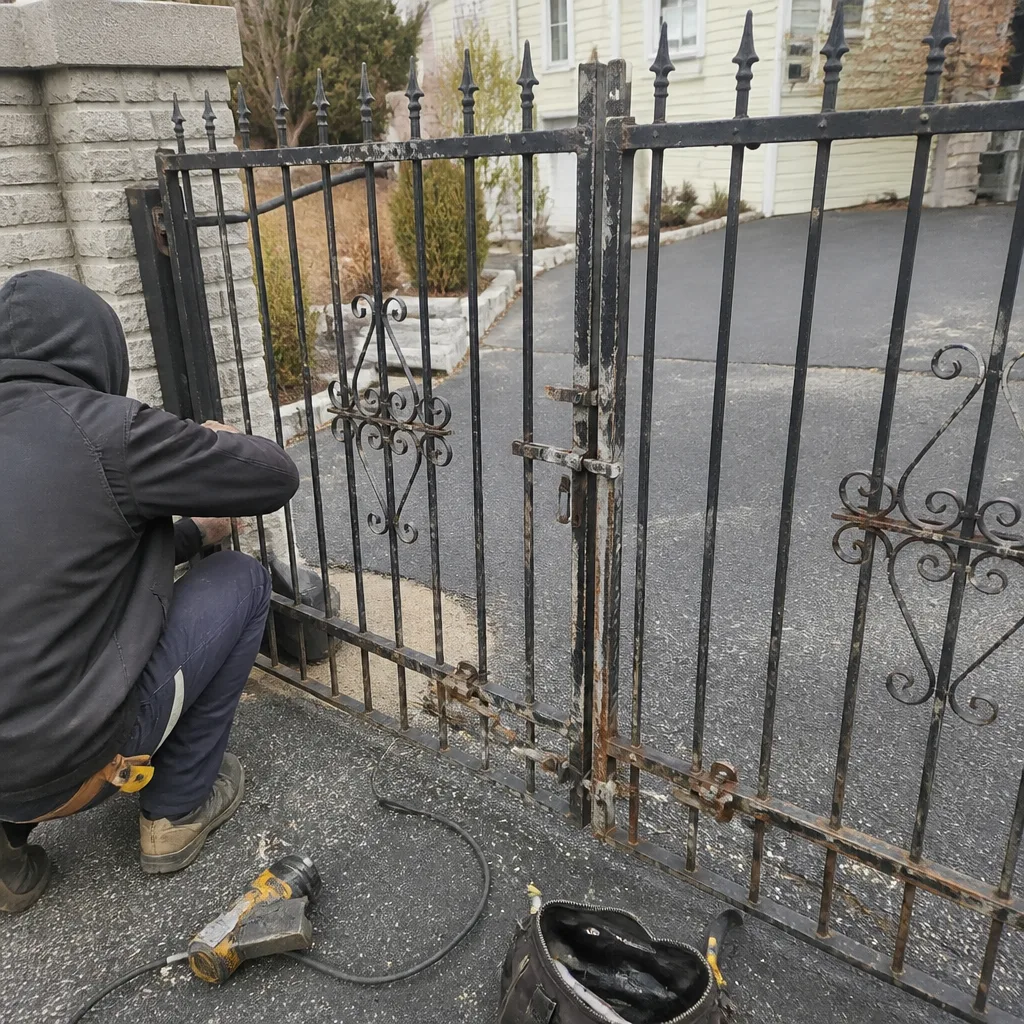 Before
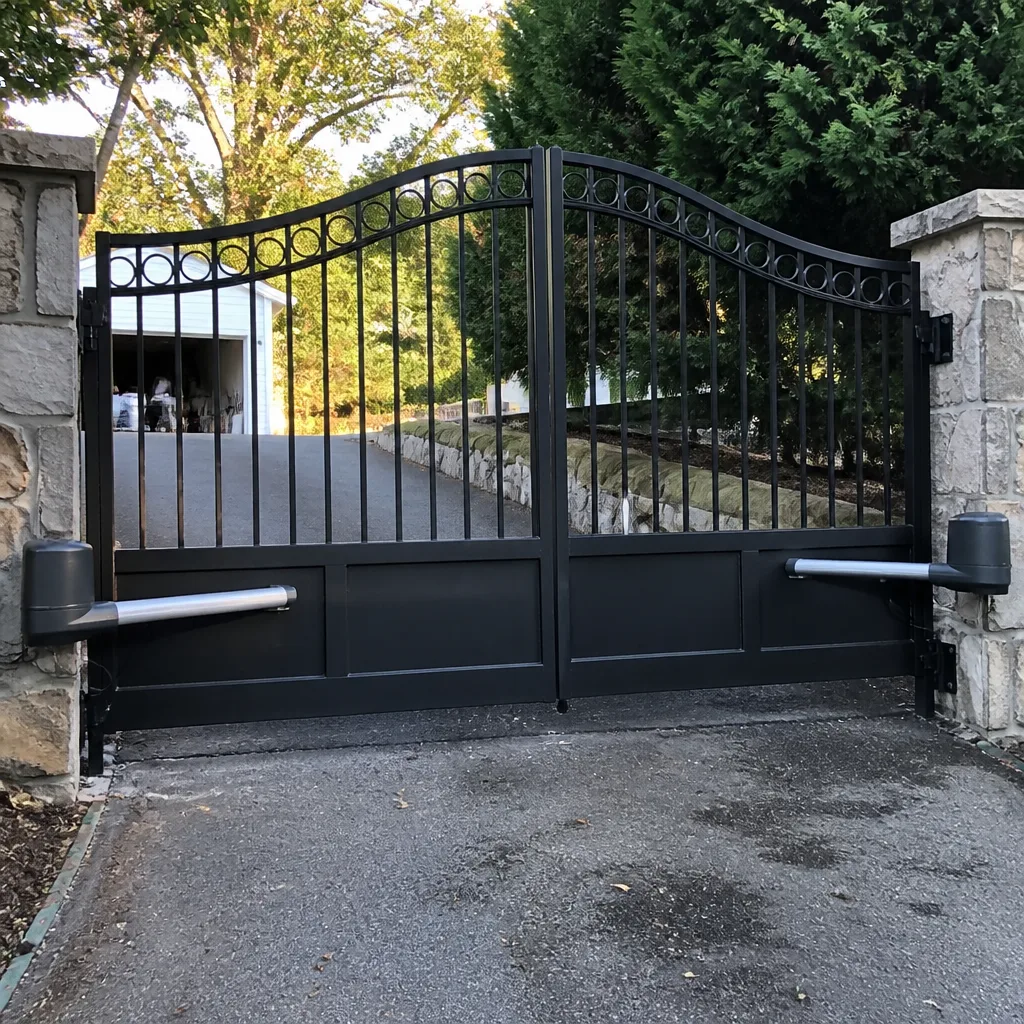 After
After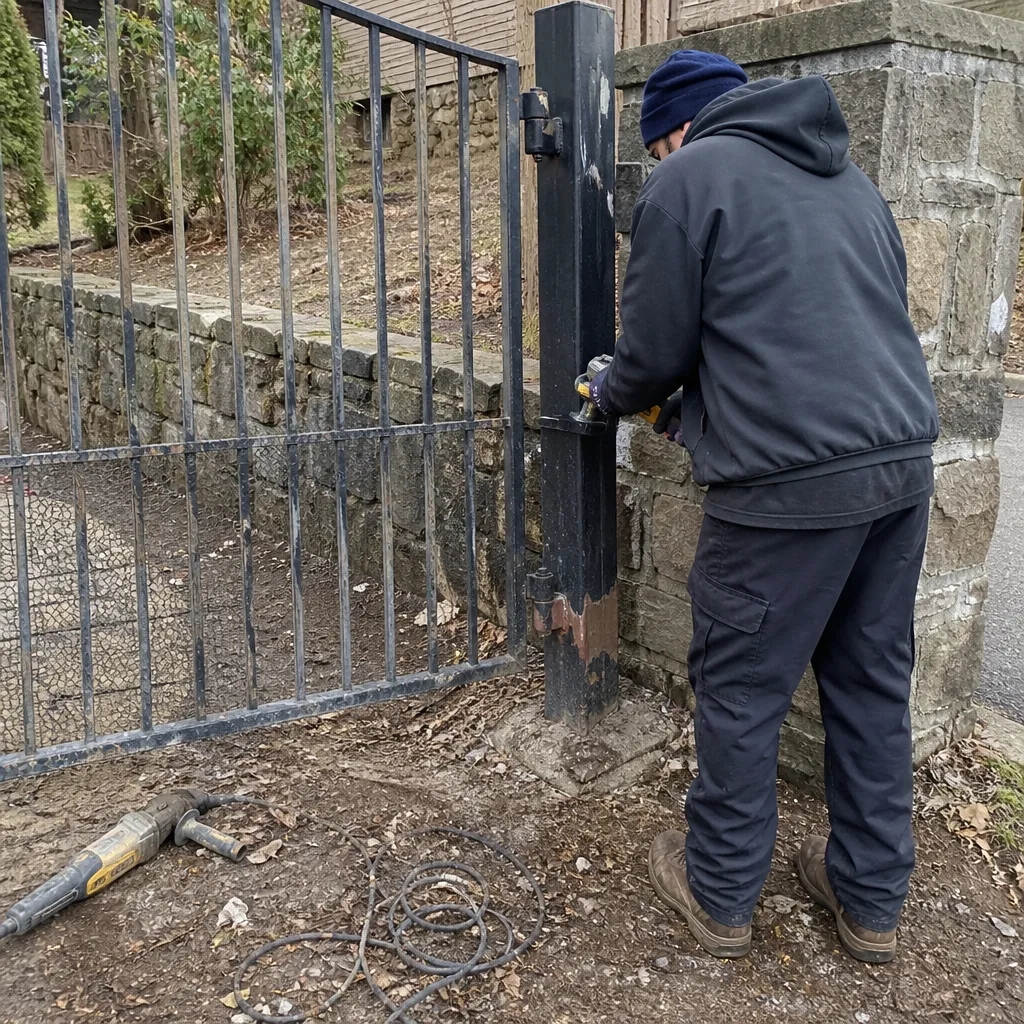 Before
 After
After Before
 After
AfterWhen to Call a Professional
Some gate projects are genuinely simple enough for a confident homeowner, but the line is easy to misjudge. Call a professional if your gate has stopped mid-travel and will not move manually, if you hear grinding from the opener gearbox, if the gate sags visibly and scrapes the ground, or if the photo eyes are mounted but the gate does not reverse when the beam is blocked. Any job involving new electrical runs, swing direction changes, or automation added to a manual gate should involve a contractor who knows the Yonkers permitting landscape. Calder Gate Repair Yonkers offers free estimates in Yonkers – call (585) 496-2148 and we will tell you straight whether your job needs a permit or is simple repair we can handle same week. For more guides & resources, visit our blog.
Frequently Asked Questions
Replacing an existing gate opener with a like-for-like unit of the same type and voltage does not require a permit in most New York municipalities, including Yonkers, because it qualifies as a repair rather than an alteration. If the replacement changes the operator type, adds automation to a manual gate, or includes new electrical circuits, a permit is typically required. Call (585) 496-2148 if you are unsure – we can tell you in two minutes whether your specific job falls under repair or alteration.
A residential gate permit in Yonkers typically costs between $75 and $200, with additional electrical permit fees of $50 to $150 if new wiring or access control is part of the job. Total permit costs for a typical gate alteration in Westchester County run $125 to $350 before any HOA fees.
Skipping a required permit can result in a stop-work order, a correction notice, and a fine, and the unpermitted work must be disclosed in many New York home sale transactions. The most expensive outcome is being forced to remove or redo the work after a failed sale inspection, which typically costs far more than the original permit fee.
Yes, New York State Building Code Section 3110 requires automatic vehicular gate operators on residential properties to be listed and labeled to UL 325, which mandates two independent entrapment protection devices, warning signage, and tested reversal force. Any gate opener sold for residential use in New York must carry the UL 325 listing mark.
DIY installation of a gate opener on an existing manual gate is an alteration that typically requires a permit in Yonkers, and you would pull the permit as the homeowner rather than working under a contractor’s license. You must still meet UL 325 safety requirements, including tested entrapment protection, or the installation will fail inspection.
Major brands including Ghost Controls, DoorKing, Elite, and Mighty Mule manufacture UL 325-listed operators that can comply with New York code when installed with the required safety devices and tested correctly. Compliance depends on the installation and configuration, not just the brand, so any opener can fail inspection if safety components are omitted or mispositioned. Calder Gate Repair Yonkers works with UL-listed equipment across all major brands and can guide you to a code-compliant setup – call (585) 496-2148 for a free estimate.
The Bottom Line
Gate repair permits in New York come down to one question: does the work restore what existed, or does it change what exists? Like-for-like repairs on your existing gate opener in Yonkers generally need no permit, but alterations involving swing direction, new automation, access control, or safety device relocation often do. UL 325 compliance, HOA overlays, and the question of who pulls the permit each carry real consequences for liability and home value. For most gate repair in Yonkers, a straightforward repair with no permit is the norm. When an alteration is planned, following the process correctly is the cheapest path by far. For electric gate repair in Yonkers that keeps your system code-compliant and safe, call Calder Gate Repair Yonkers at (585) 496-2148 – we will give you a straight answer on permits and a written price before any work starts. Learn more about who we are at our Calder Gate Repair Yonkers home page.
Written by Nico Alvarez, Owner at Calder Gate Repair Yonkers, serving Yonkers since 2009.